RAMBLE HUICHANG
An Immersive Theatre Journey, reviving tradition through cultural IP

OVERVIEW
Transforming “sleeping tea-picking opera” into a cultural brand for a small town, using service design to revitalize the cultural-tourism ecosystem.
Regional traditional culture is the treasure of local development, it not only enriches people's spiritual connotation, but also promotes the development of related cultural and educational industries, improves local inequality, and injects new vitality into society.
This project aims to optimize the planning and services of Huichang Theatre Village. By upgrading operation plans, integrating service blueprints, designing activity plans and food packaging, the project aims to bring drama culture into people's lives, contribute to the sustainable development of Huichang Theatre Village, and revitalize the unique cultural charm of this little-known small city.
Company
Huichang Theatre Village, Shang Theatre
Timeline
3 month
Role
Service Designer, Brand Experience Designer
Responsibilities
User Research, Journey Mapping, Service Strategy, Experience Design, Brand Integration
STORYBOARD
BACKGROUND
A Heritage Stuck in the “Old School”.
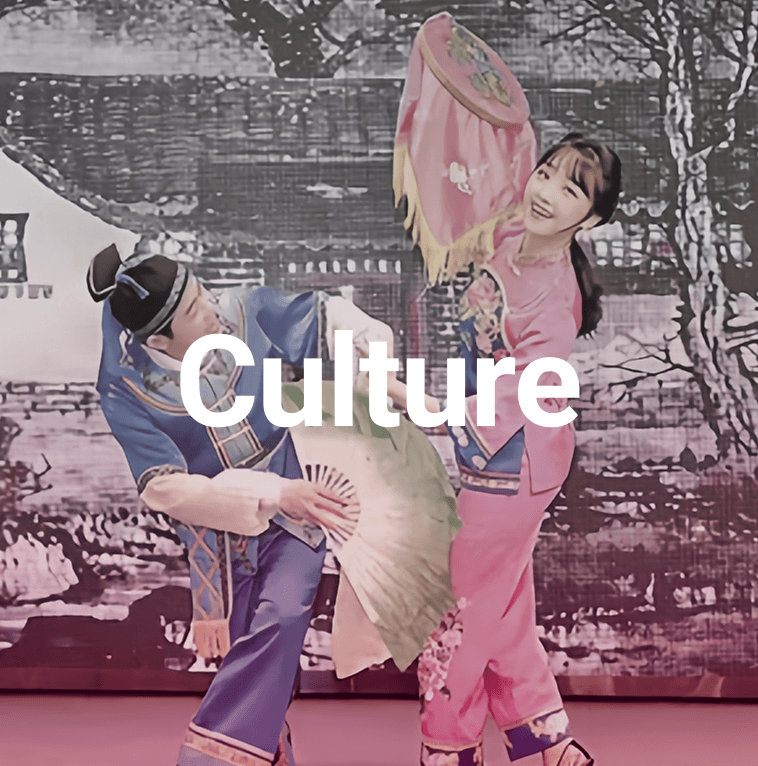
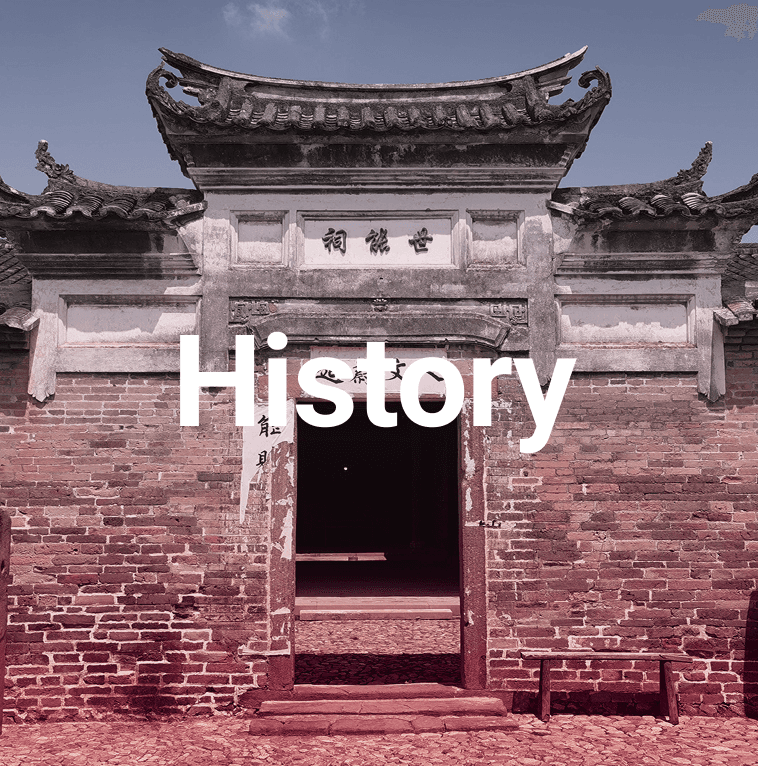
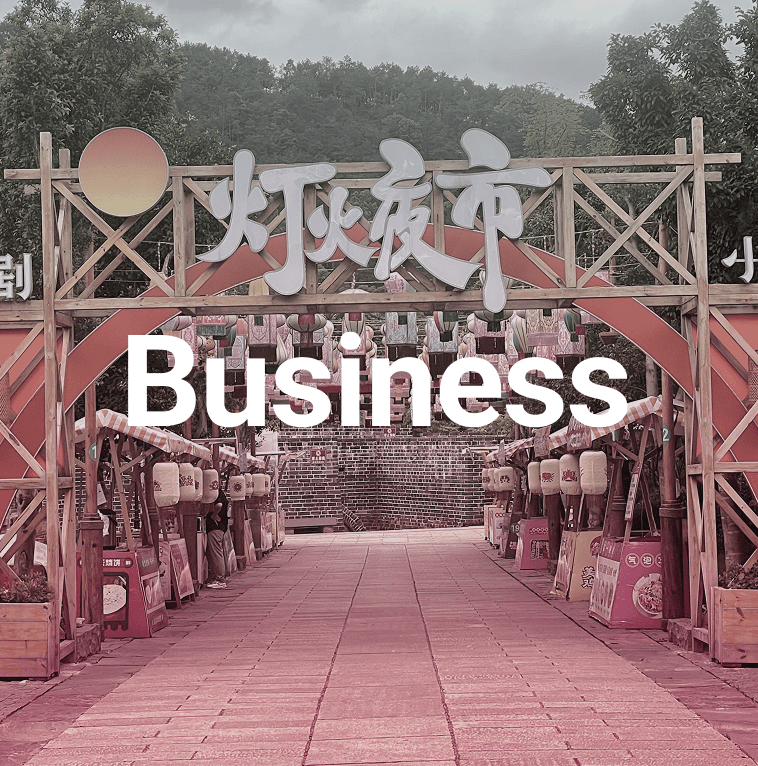
Huichang holds two cultural treasures: the national intangible heritage Tea-Picking Opera and a millennium-old theatre town. Yet both face the same problem: celebrated in name, but with little real engagement.

INSIGHT
The problem isn’t the culture itself — it’s the lack of connection between culture and people.
The solution isn’t to “replicate tradition,” but to rebrand and recontextualize it into everyday life. My role was to build that bridge.
FIELD STUDY
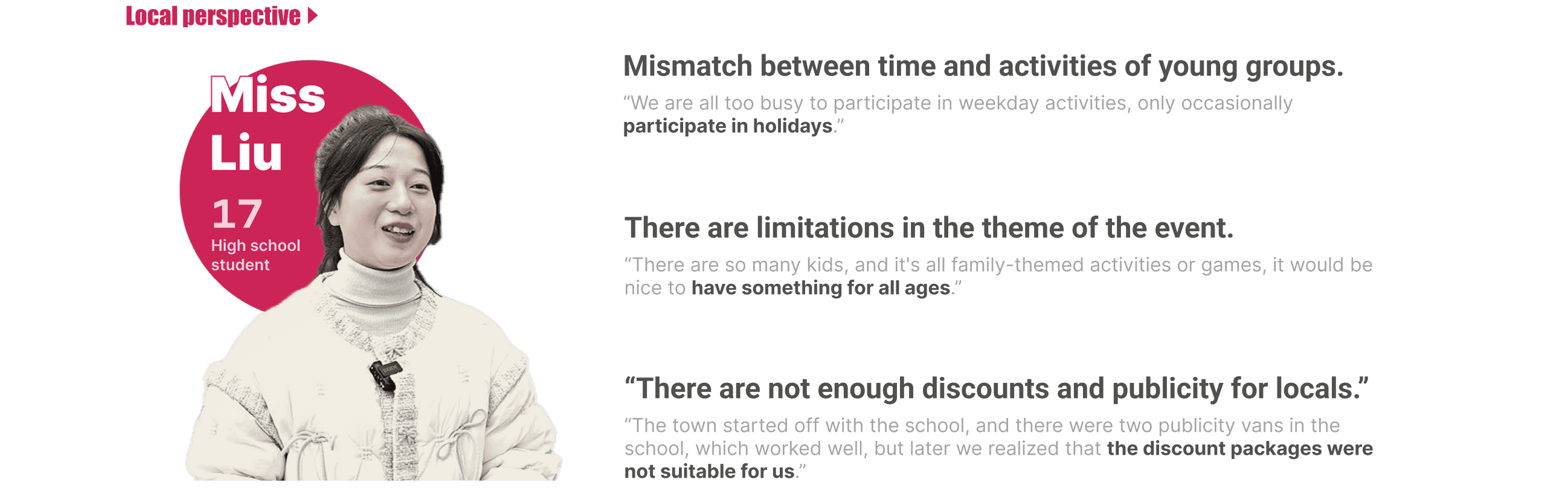
As a girl from Huichang, I am able to conduct more comprehensive research on the local area.
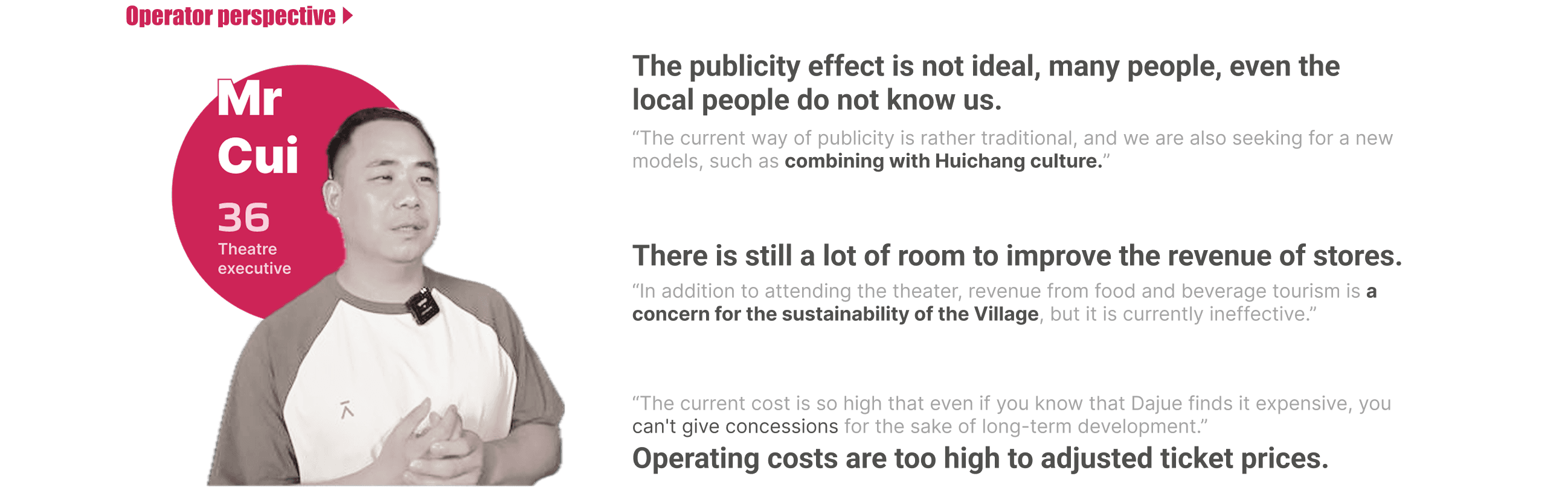
I have made three round trips to the cities and villages of Huichang, conducting on-site investigations together with local people, shopkeepers, volunteers and tea-picking opera actors to collect the views and suggestions of different groups, and synthesize the possible paths to identify the root causes of the conflicts and solving the pain points of low participation and low awareness of theater among the local people.
SURVEY
Audience analysis
Among locals, participation in theater activities is higher among 18-25 year olds and 36-45 year olds.
of them are outside theater enthusiasts.
5/4
of visitors have some knowledge and of the theater arts.
55%
Consumption habits
Most visitors see theater less frequently within the Huichang theater village.
5%
watching
theater
11%
drama
course
38%
festival
activities
42%
festival
activities
Market feedback
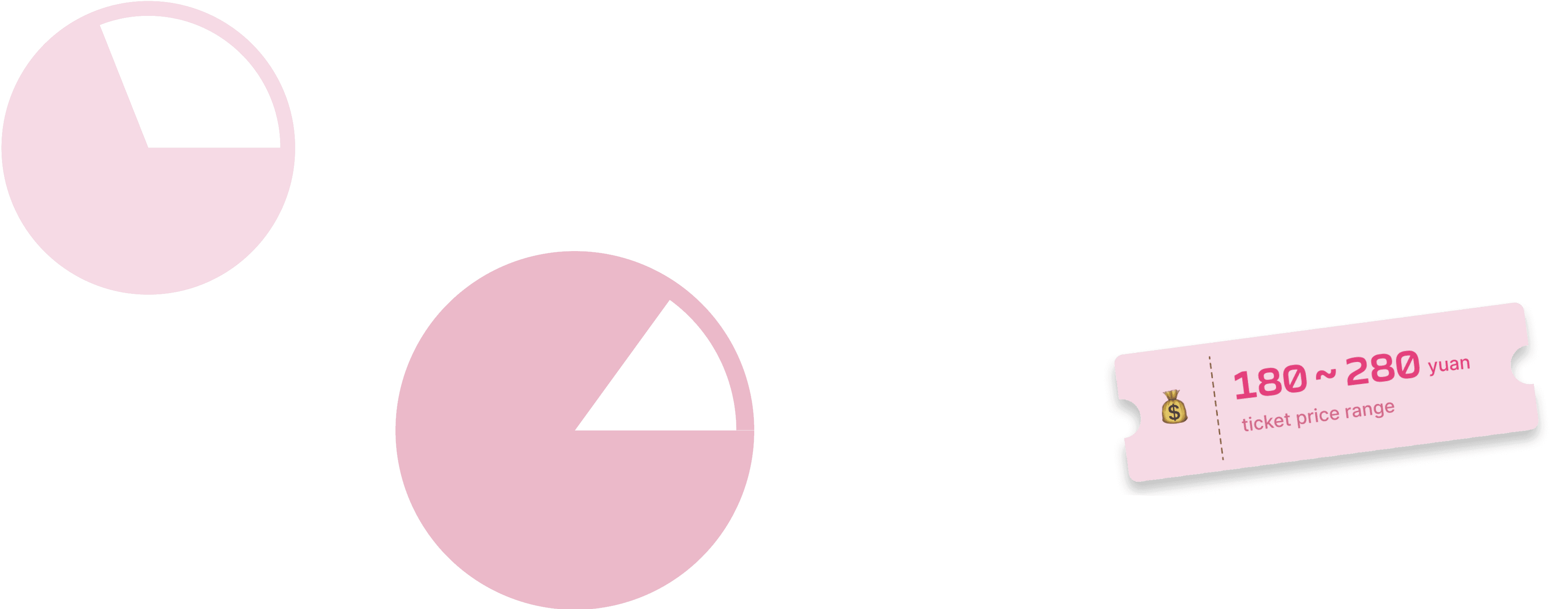
Ticket prices for theatre need to be optimized.
85%
think fares should be set at $50-$150.
69%
Participant think fares are too expensive.
6:1


Event planning
Event planning focuses only on the parent-child and older demographics, ignoring the wider potential audience.
Advertising
Most of local tourists learn about the theatre village through recommendations from friends.
74%
INTERVIEWS
CASE STUDY
One Region + One Theme + Multiple Plays
To expand perspectives, I benchmarked against successful cultural-tourism models.
Wuzhen Theatre Festival
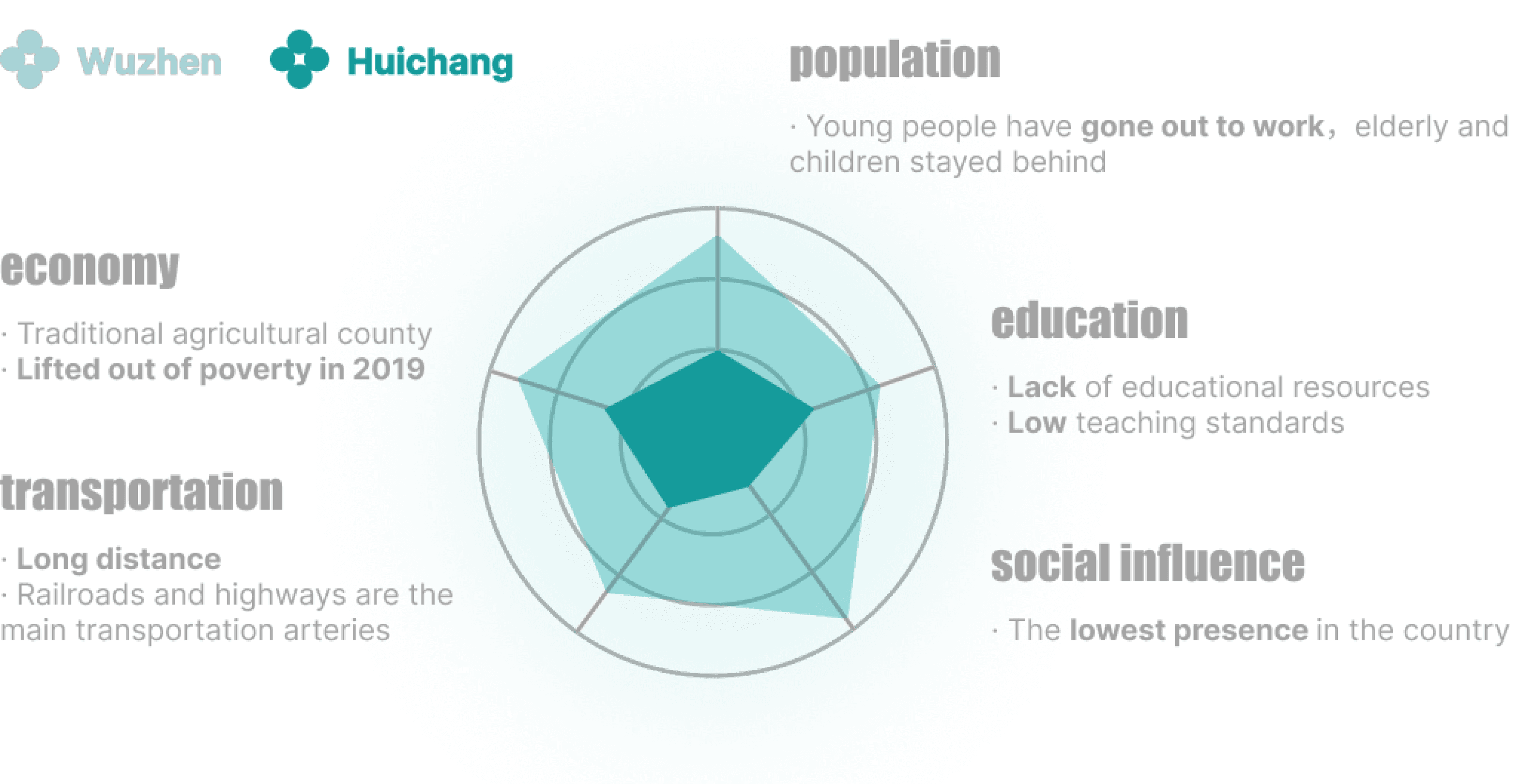
Wuhzen Theatre Festival combines diversified repertoires and activities, relying on the characteristics of the water town, flourishing theater culture and strengthening international exchanges. As a famous theater festival in Asia, it shows the unique charm of art and culture.
Competitive summary
Compared with Wuzhen, Huichang has obvious disadvantages, which need to be investigated in depth and extracted from the factors conducive to the deep and lasting development of theater culture, so as to help the better development of the theater town.

DELIVERABLES
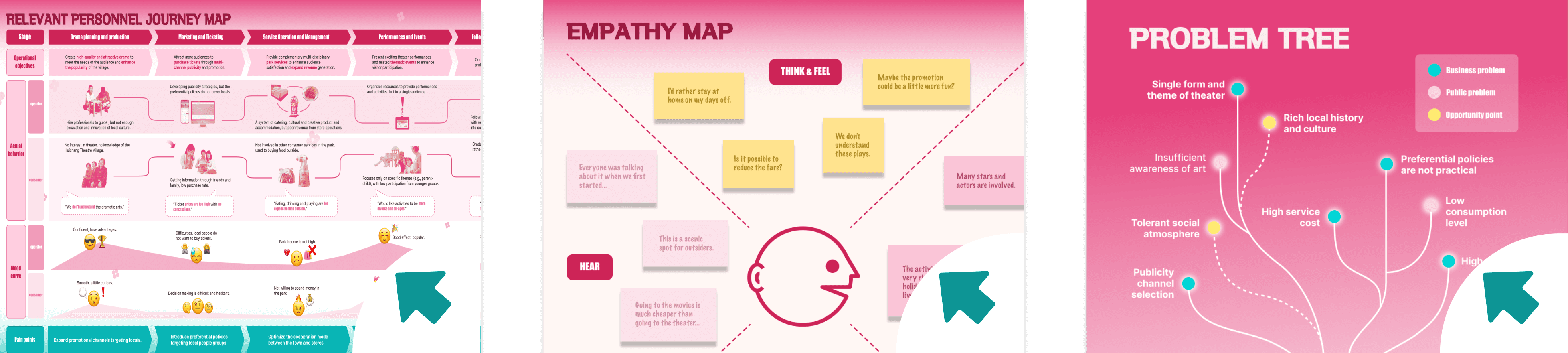
Using analytical tools to define pain points, align stakeholders, and guide my design.
I employed specialized tools to dissect challenges, clarify pain points, and ensure alignment among all stakeholders. These deliverables not only deepened our grasp of how to bridge culture with daily life but also served as clear, actionable resources for teams and partners involved in the design process.
CORE STRATEGY
Weave tea-picking opera into daily town life.
Instead of one-off spectacles, my strategy was to weave tea-picking opera into daily town life. Based on the detailed analysis of the problems and pain points of Huichang Theatre Village, I have formed three levels of ideation programs, which contain three outputs of service optimization blueprint, performance form innovation and packaging design to solve different problems.
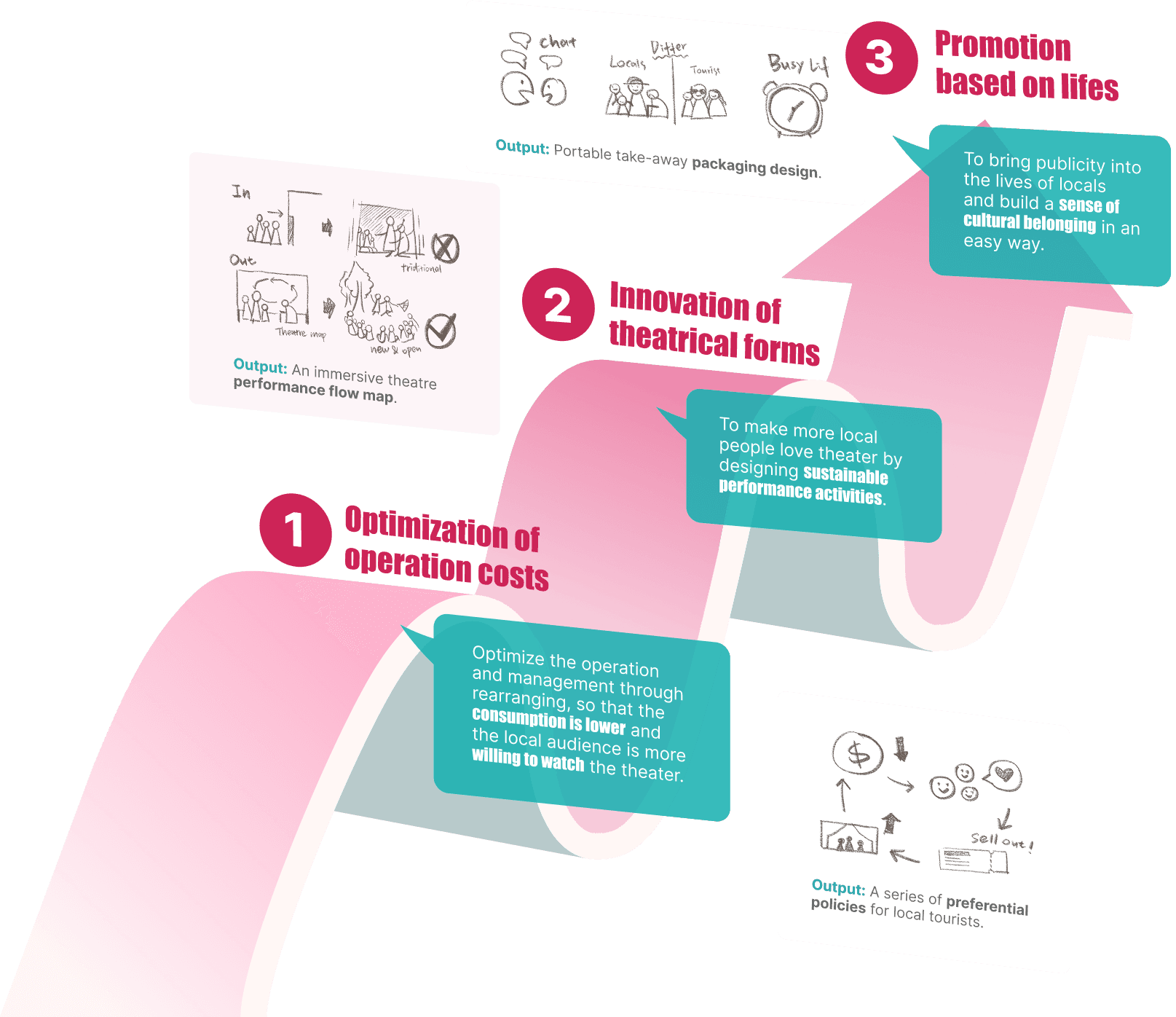
STEP1: INNOVATION of THEATRICAL FORMS
Cultural Activition: Making traditional Tea-Picking Opera young again.
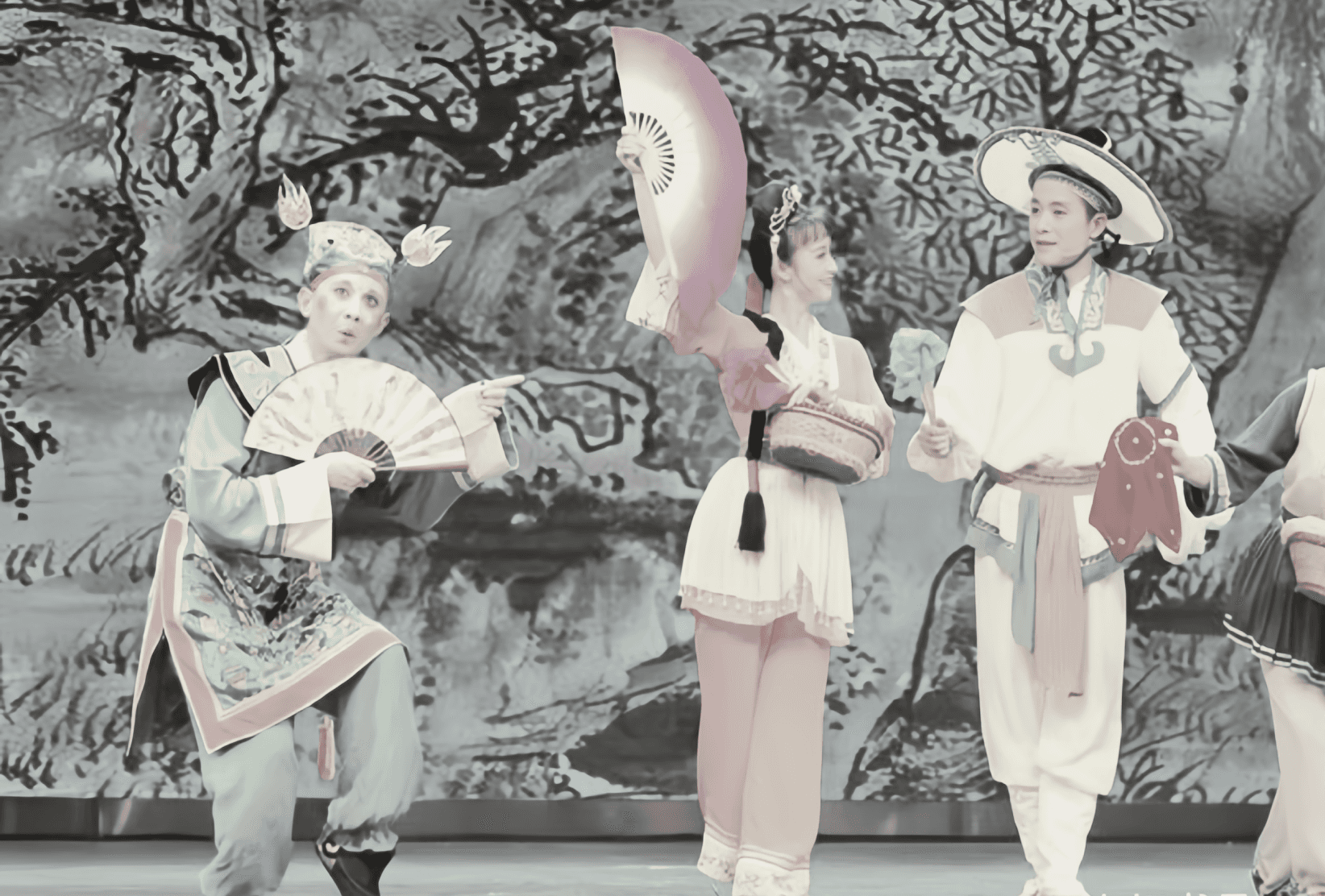
Tea Picking Opera
The tea picking opera in southern Gannan, originating in Ganzhou, was a locally influential traditional drama. It later spread widely, giving rise to many professional troupes, marking its professional development.
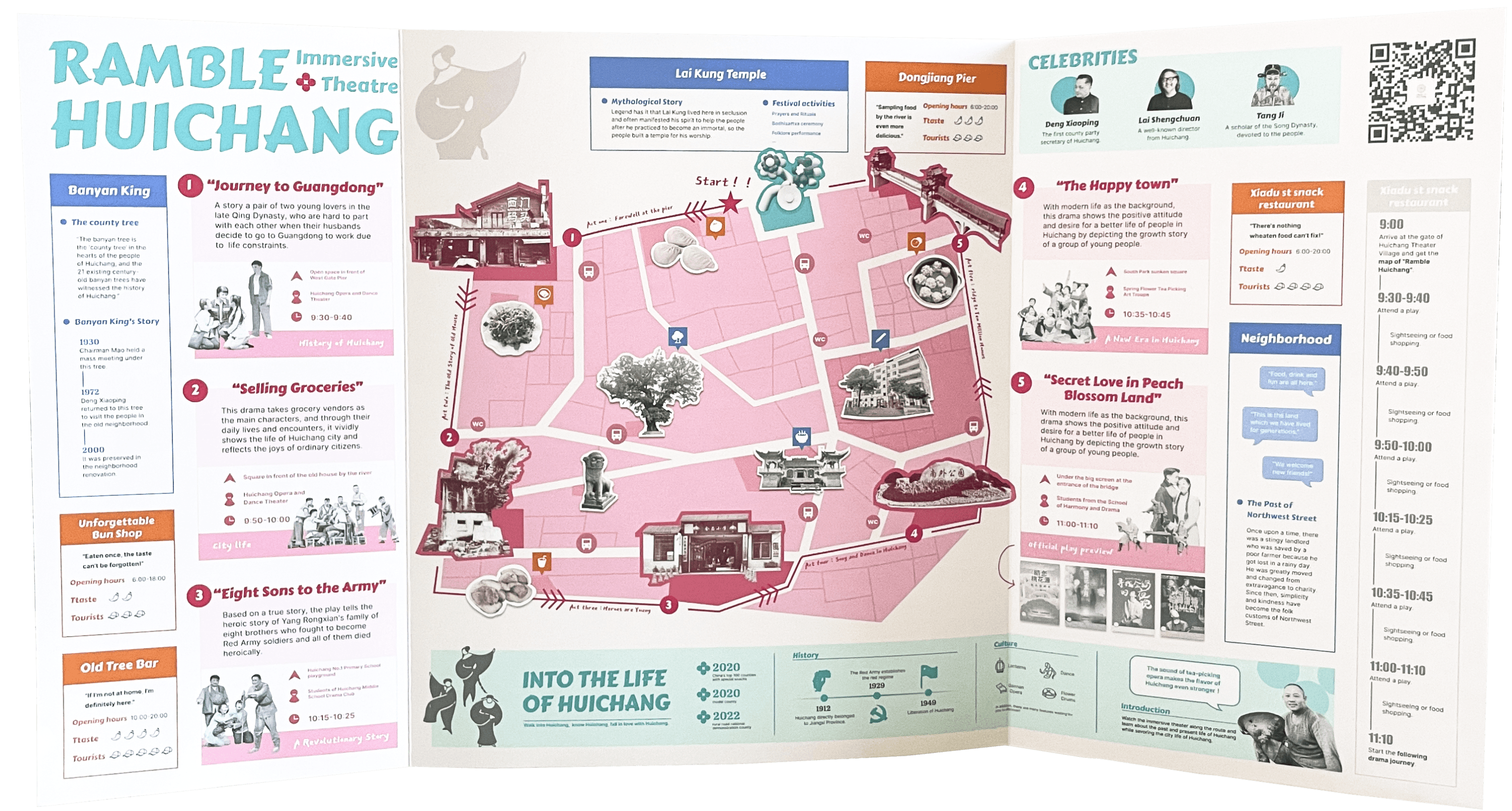
Imersive Theatre Map Design
Huichang Theatre Village, well-connected in the old city, can adopt immersive theater style. Preserve the opera’s local and everyday roots, but present it through immersive and interactive formats that appeal to younger audiences. So I planed routes and repertoired accordingly to attract locals and spark their theater interest.
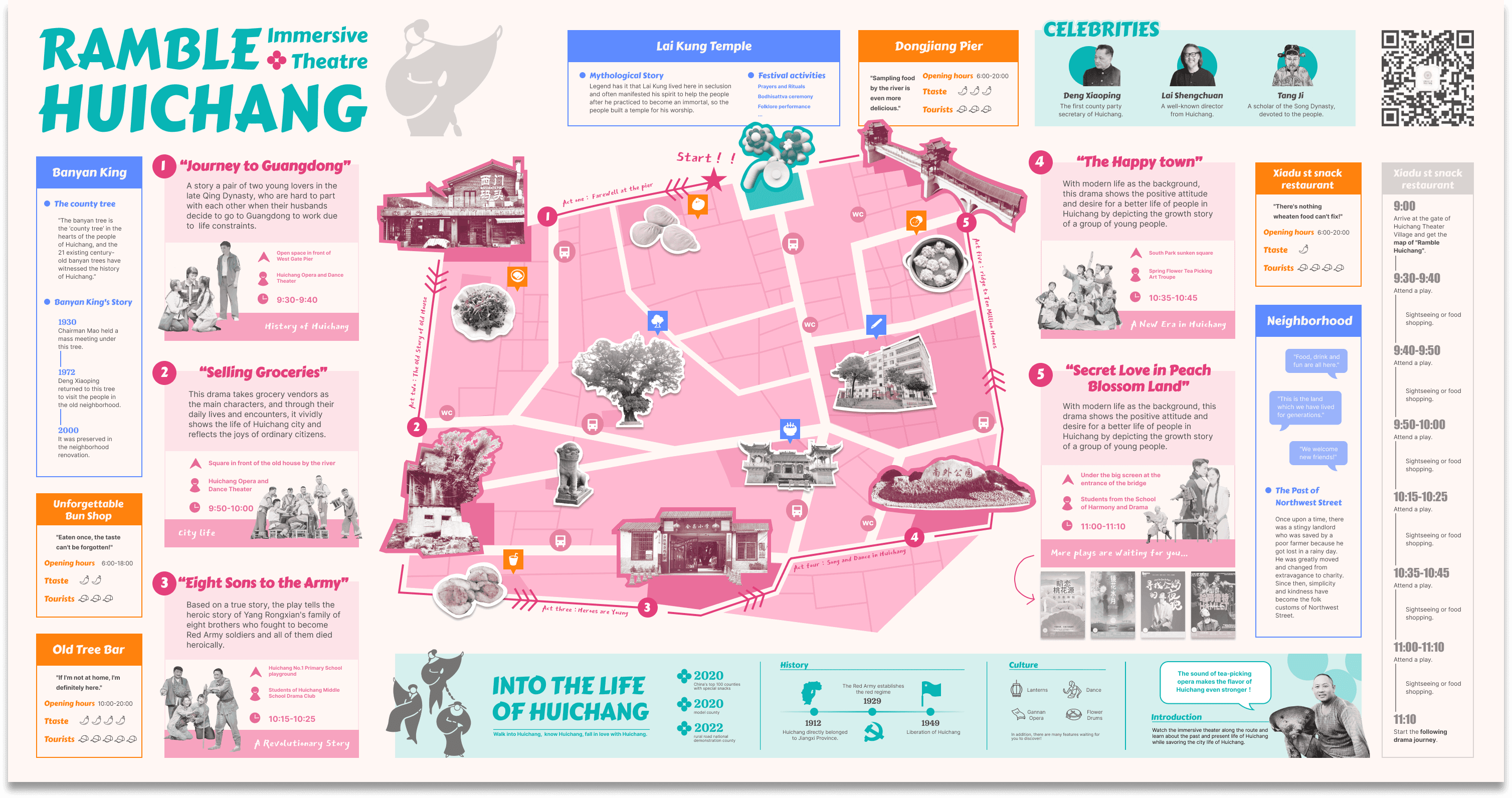
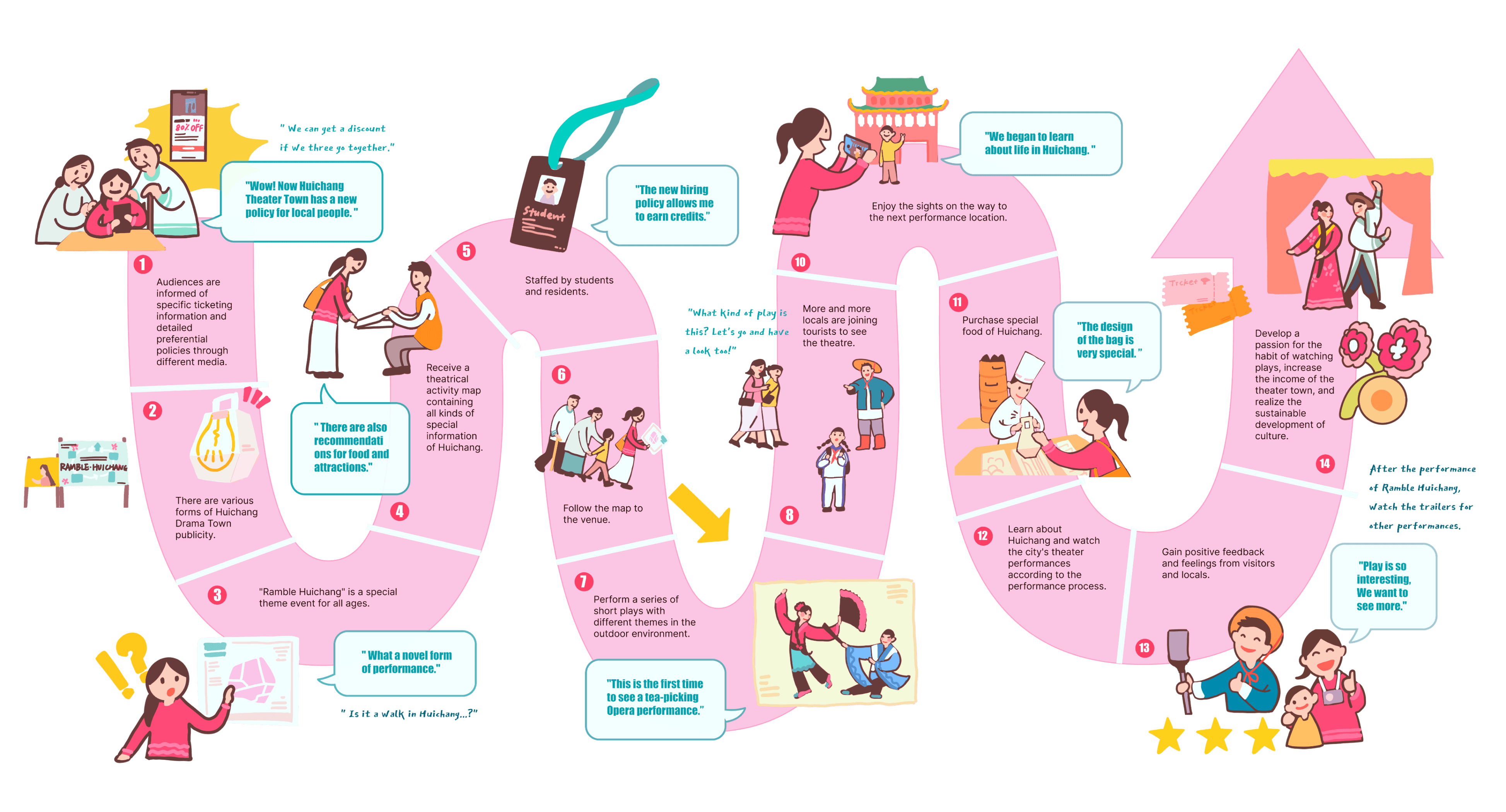
Activity Storyboard
Visitors see the advertising.
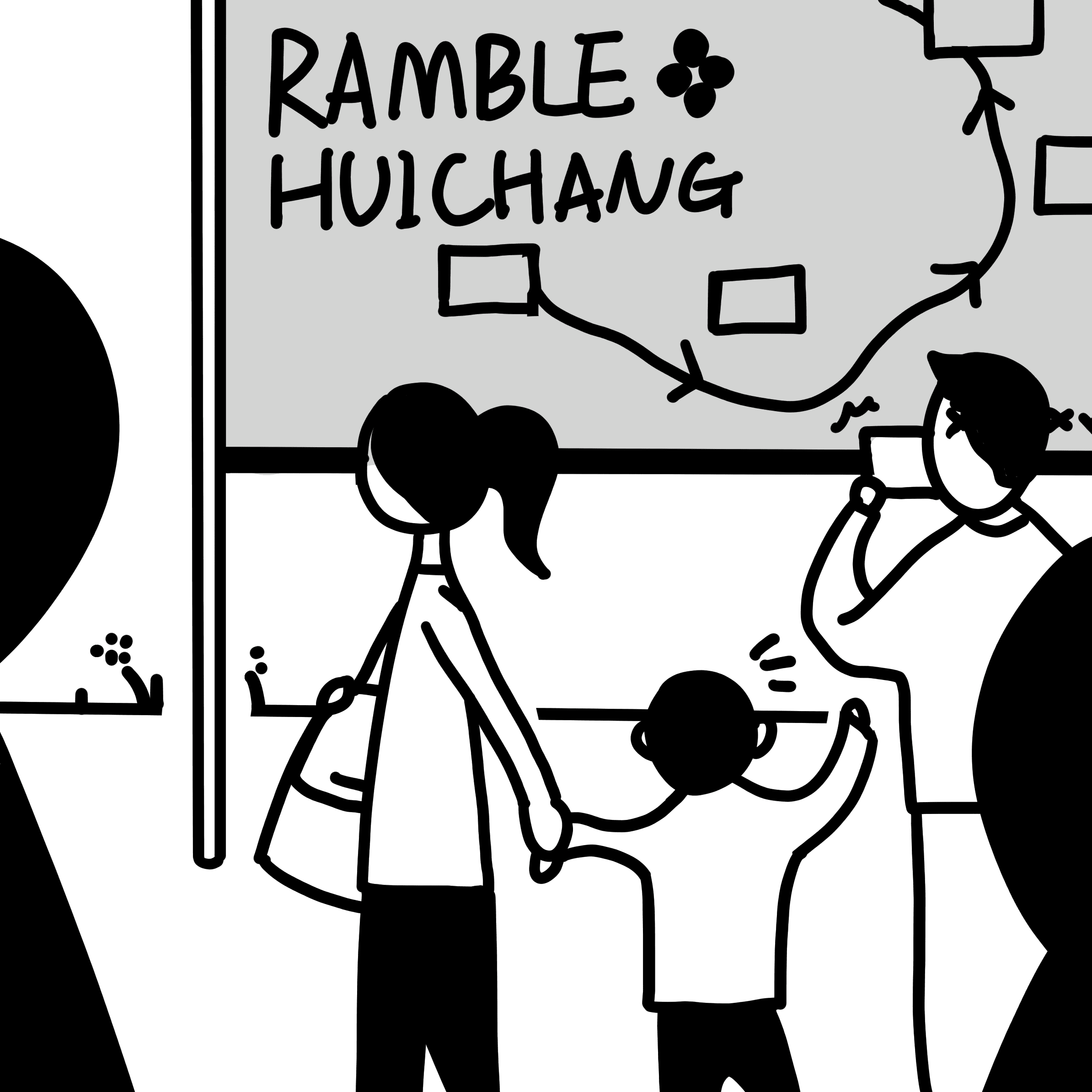
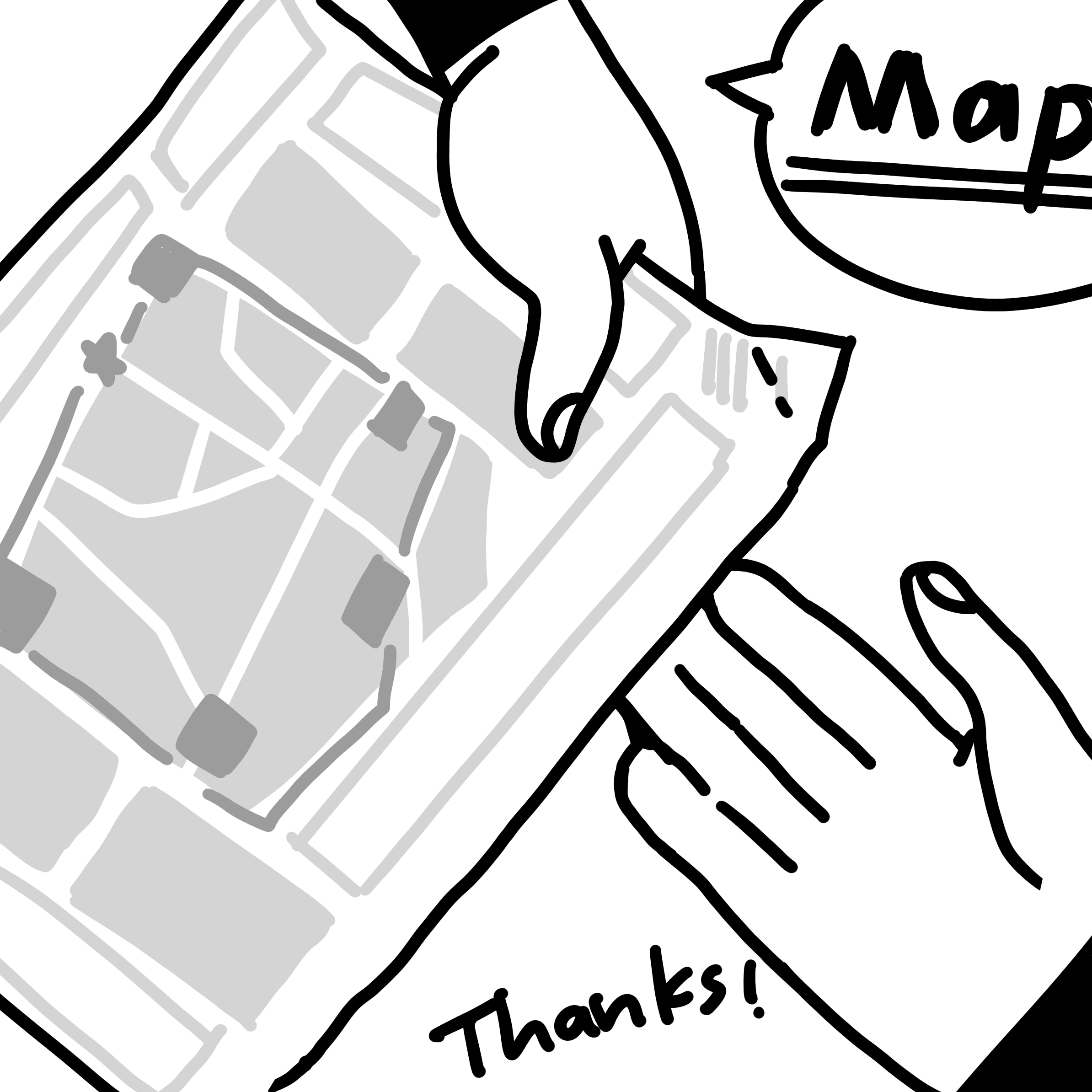
Visitors get the activity map.
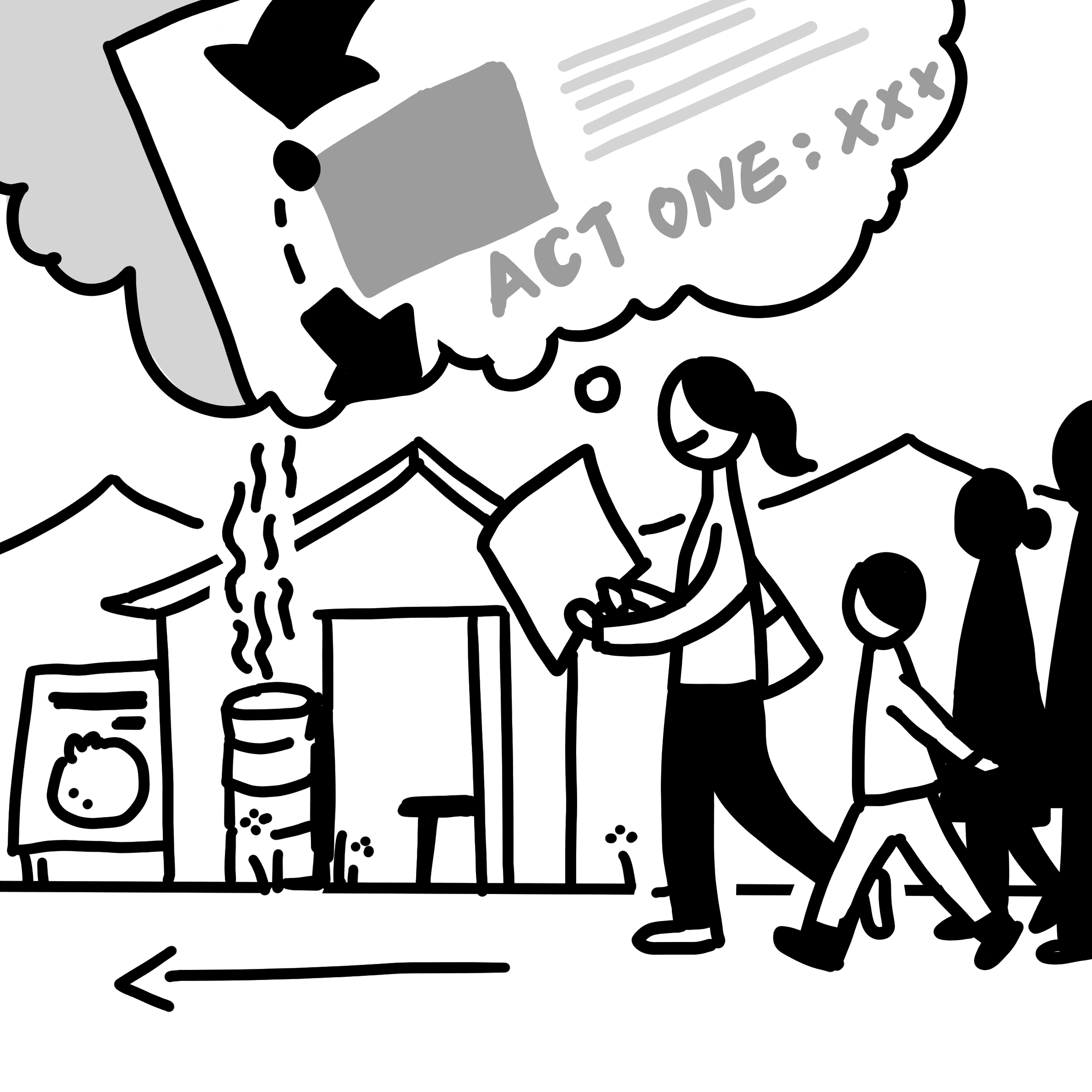
Go to the first performance place according to the map.
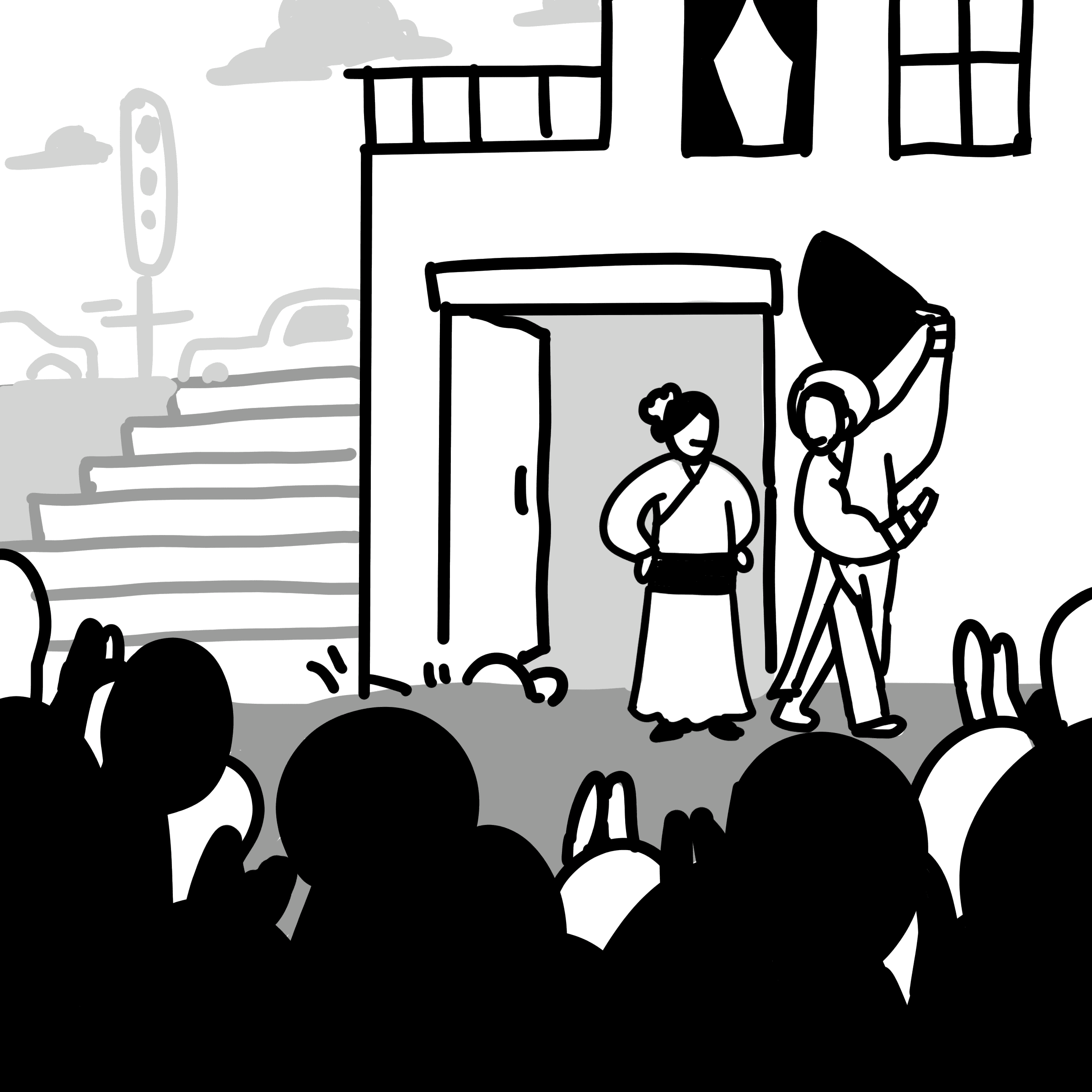
Continue to watch another play.
More and more local people are going to the theater.
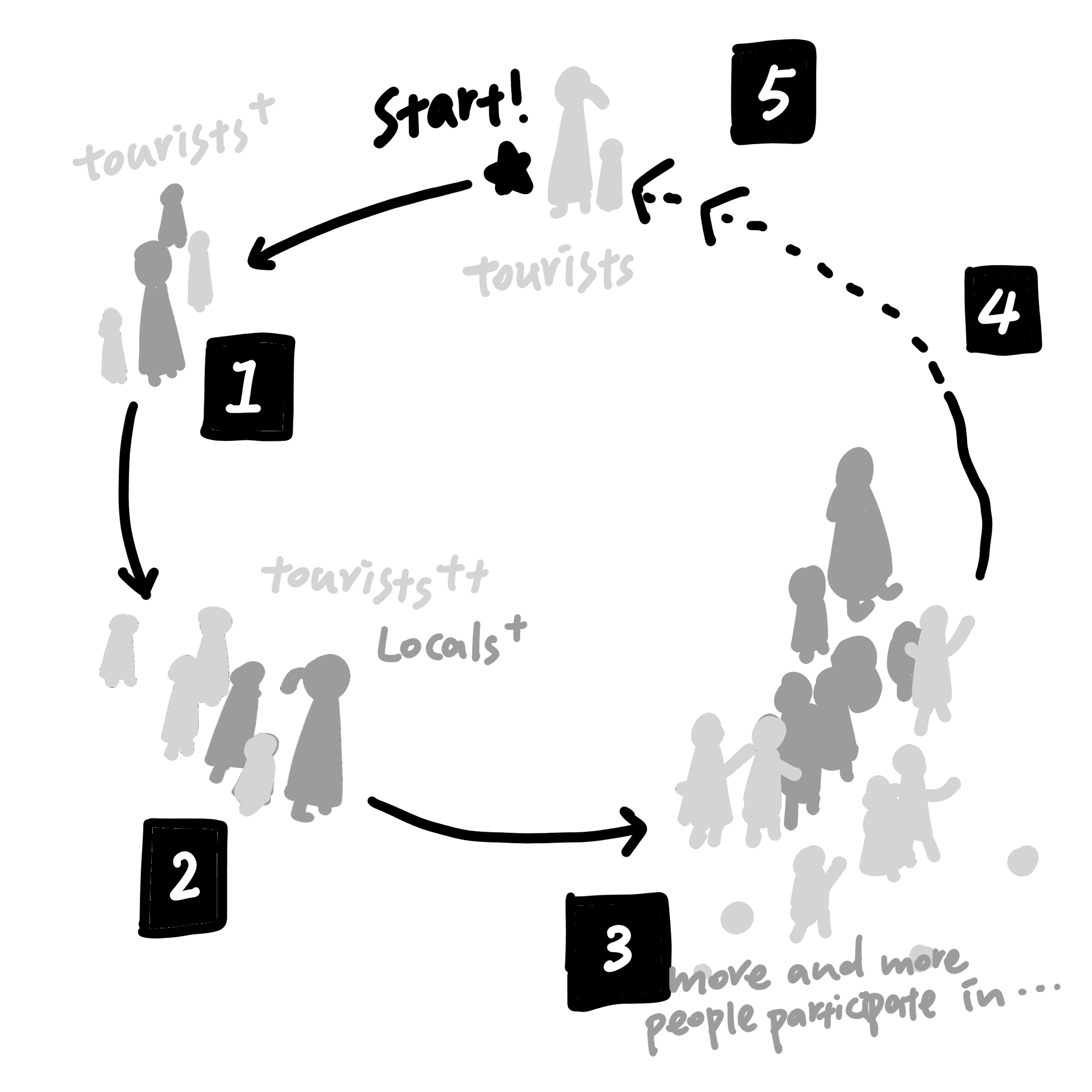
Both tourists and locals have a good experience.

Buy food and visit scenic spots.
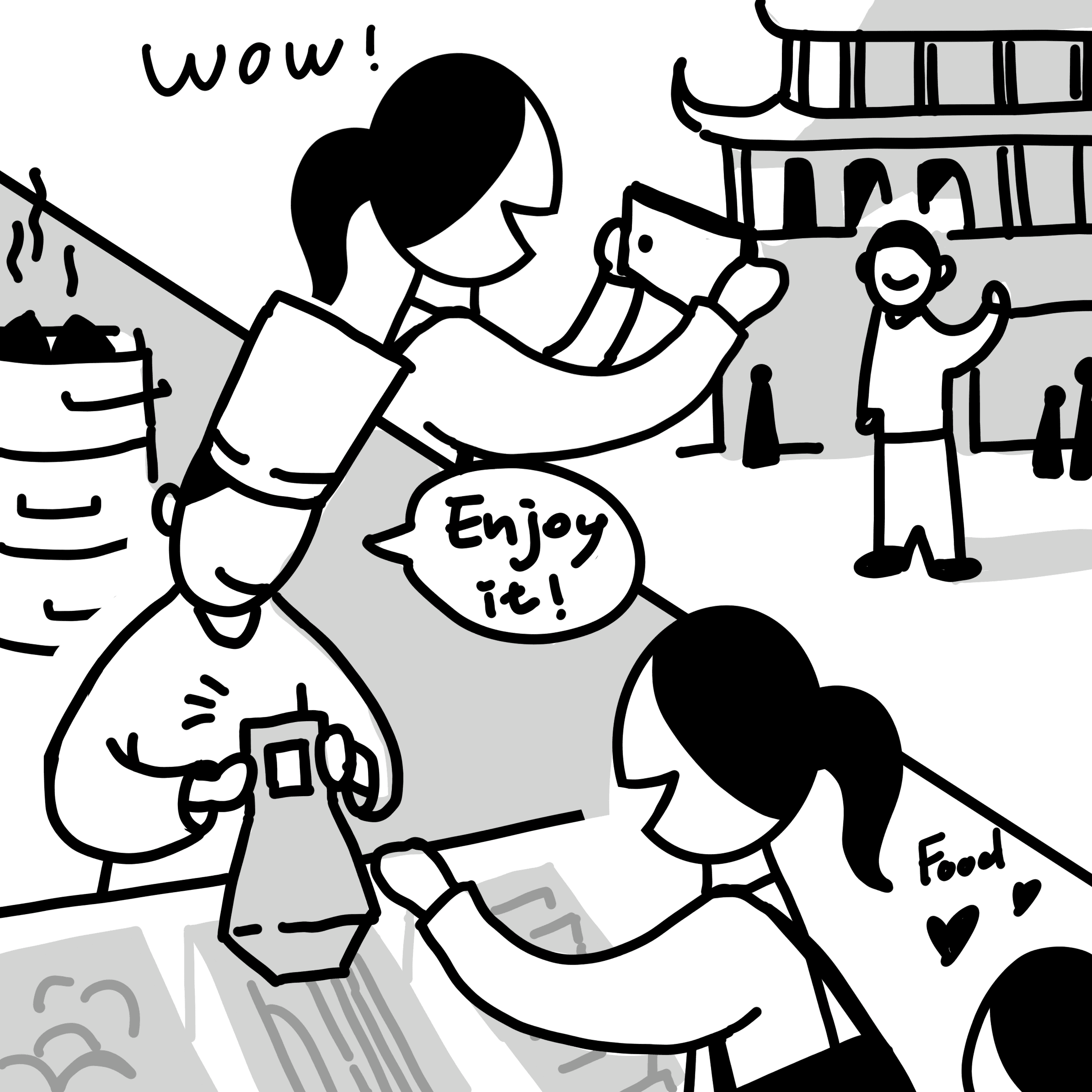
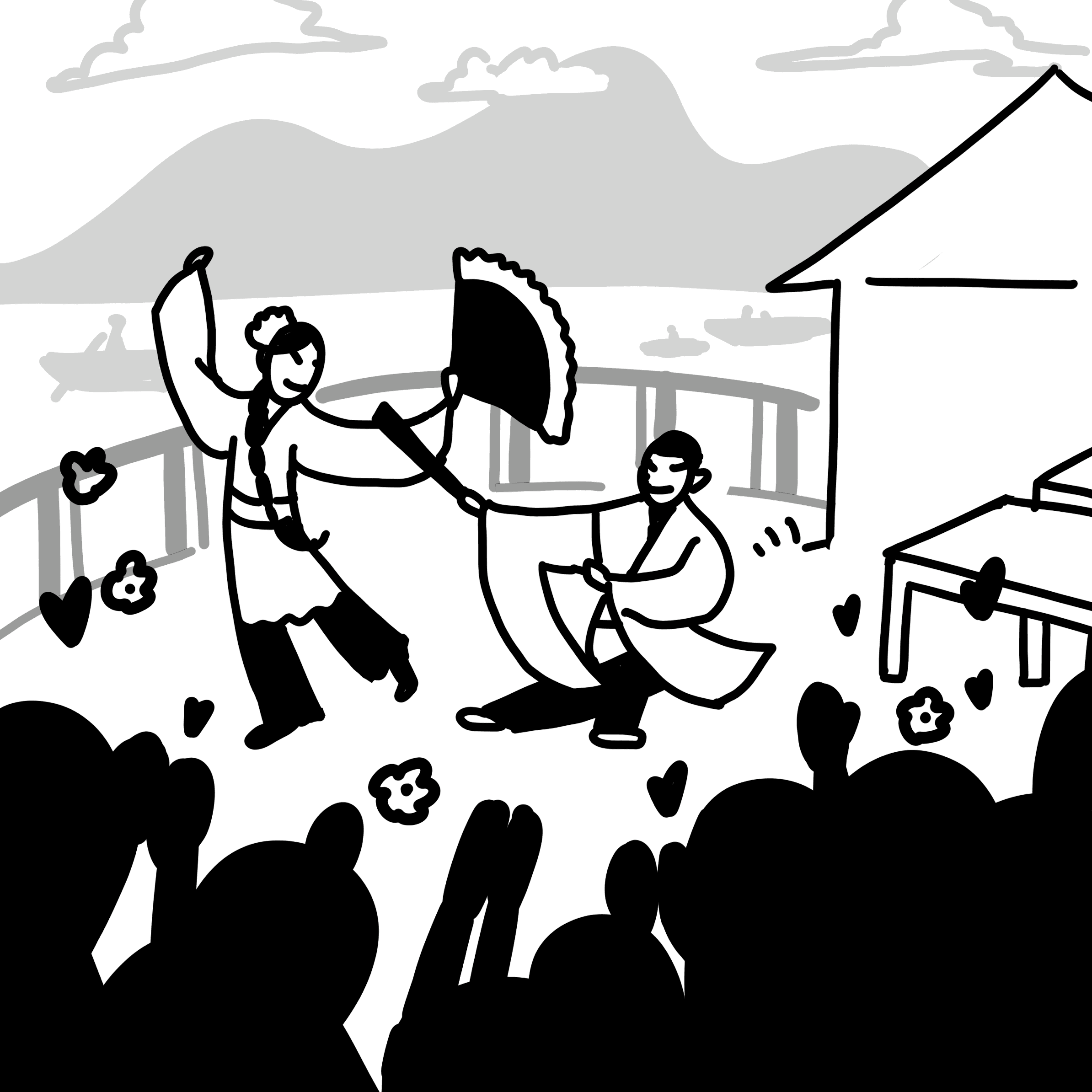
Watch a wonderful play.
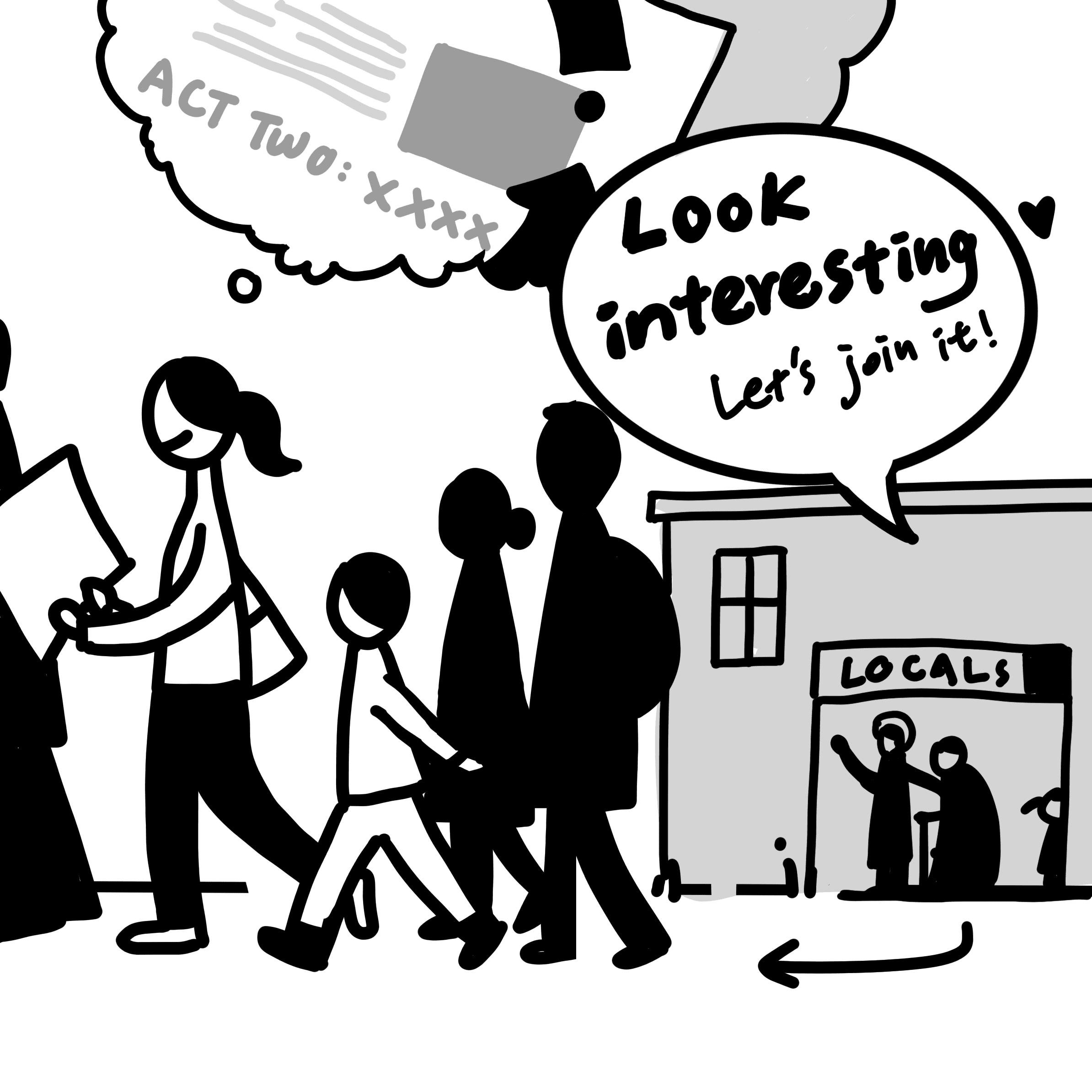
Move on to the next destination, and many locals join in.
STEP2: OPTIMIZATION of OPERATION COSTS
Layered User Operations: Engaging Diverse Groups.
Formulate preferential policies and related activities based on the living habits, rhythms and pain points faced by different audience groups to expand the participation of local groups in the drama town.
Local Residents
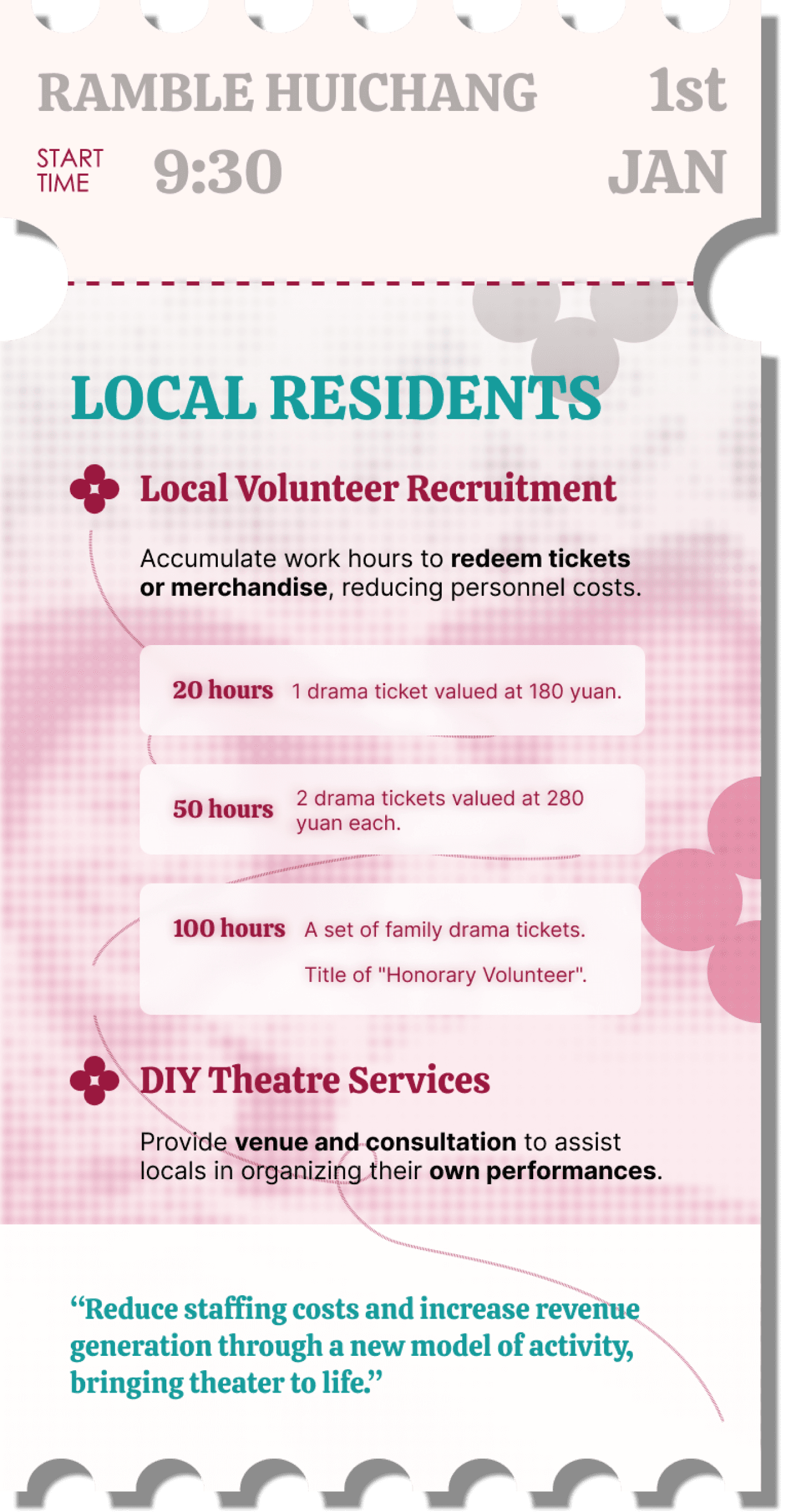
Resident Feedback
"While working, watching the play, and getting fare subsidies and incentives is a very suitable way for us pragmatic locals to get to know the theater. There should be a lot of people willing to support and participate in this policy."
Student Group
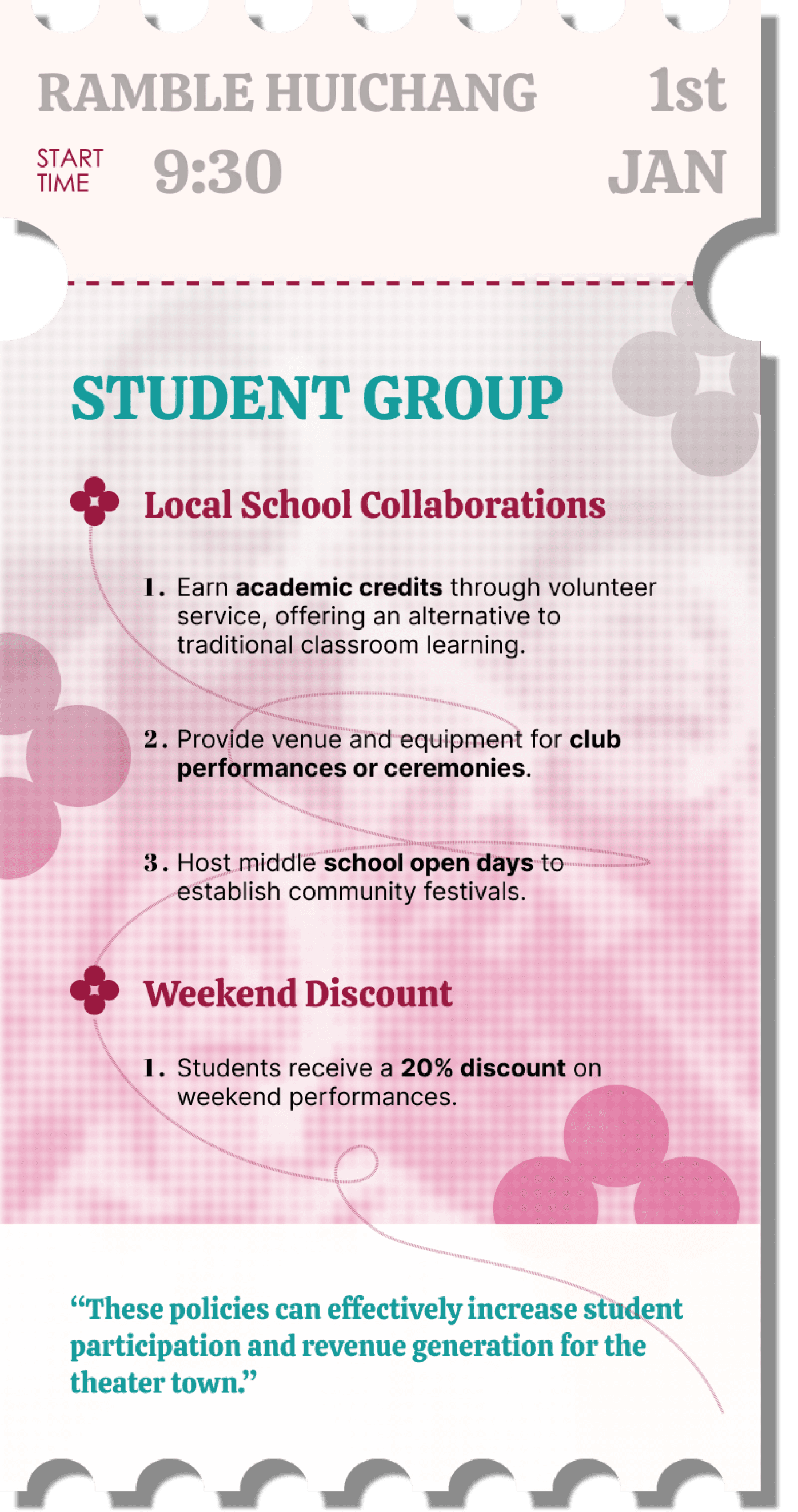
Student Feedback
"If you can really solve the problem of credits by volunteering, it's much more fun than taking classes! I look forward to seeing the school club perform here one day...".
Student Group
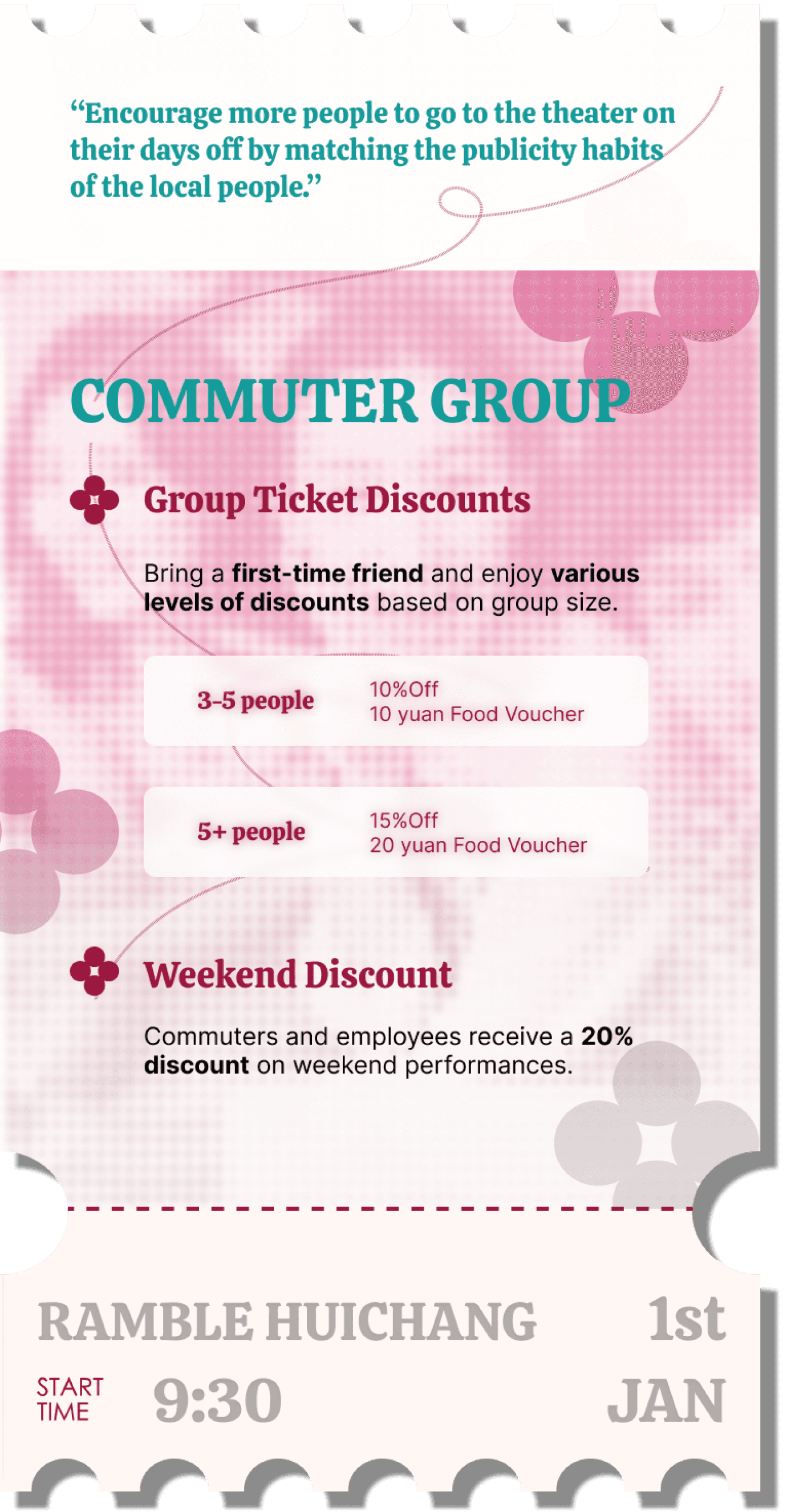
Commuter Feedback
"If the group ticket policy and weekend preferential policies can be implemented, then many companies' group construction activities can choose to go to here. I believe it will bring more revenue to Theatre Village."
STEP3: BUSINESS SYNERGY
Promotion based on lifes: Food as a Cultural Carrier.
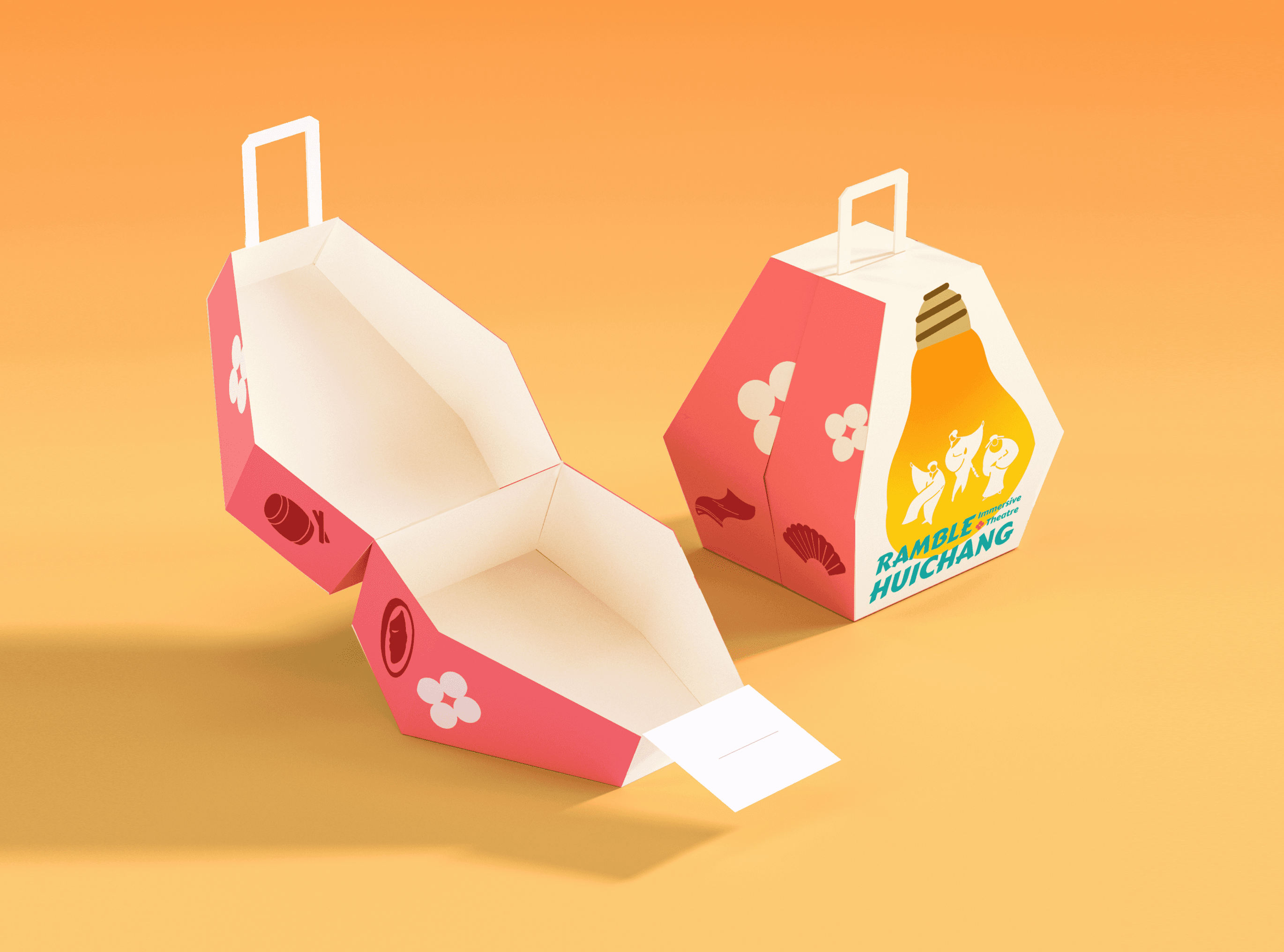
During the research process, I found that the food in Huichang is very unique. Street food has already been introduced for sale by the Huichang Theatre Village, and plays an important role in the promotion of the cultural tourism program of Huichang Theatre Village. To bring publicity into the lives of locals and build a sense of cultural belonging in an easy way.
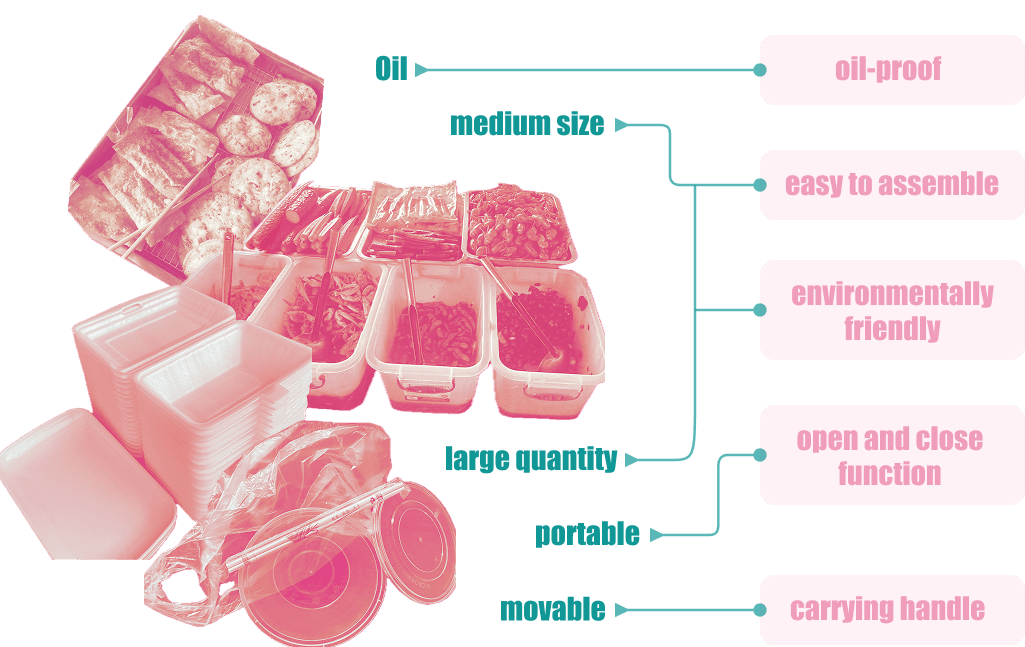
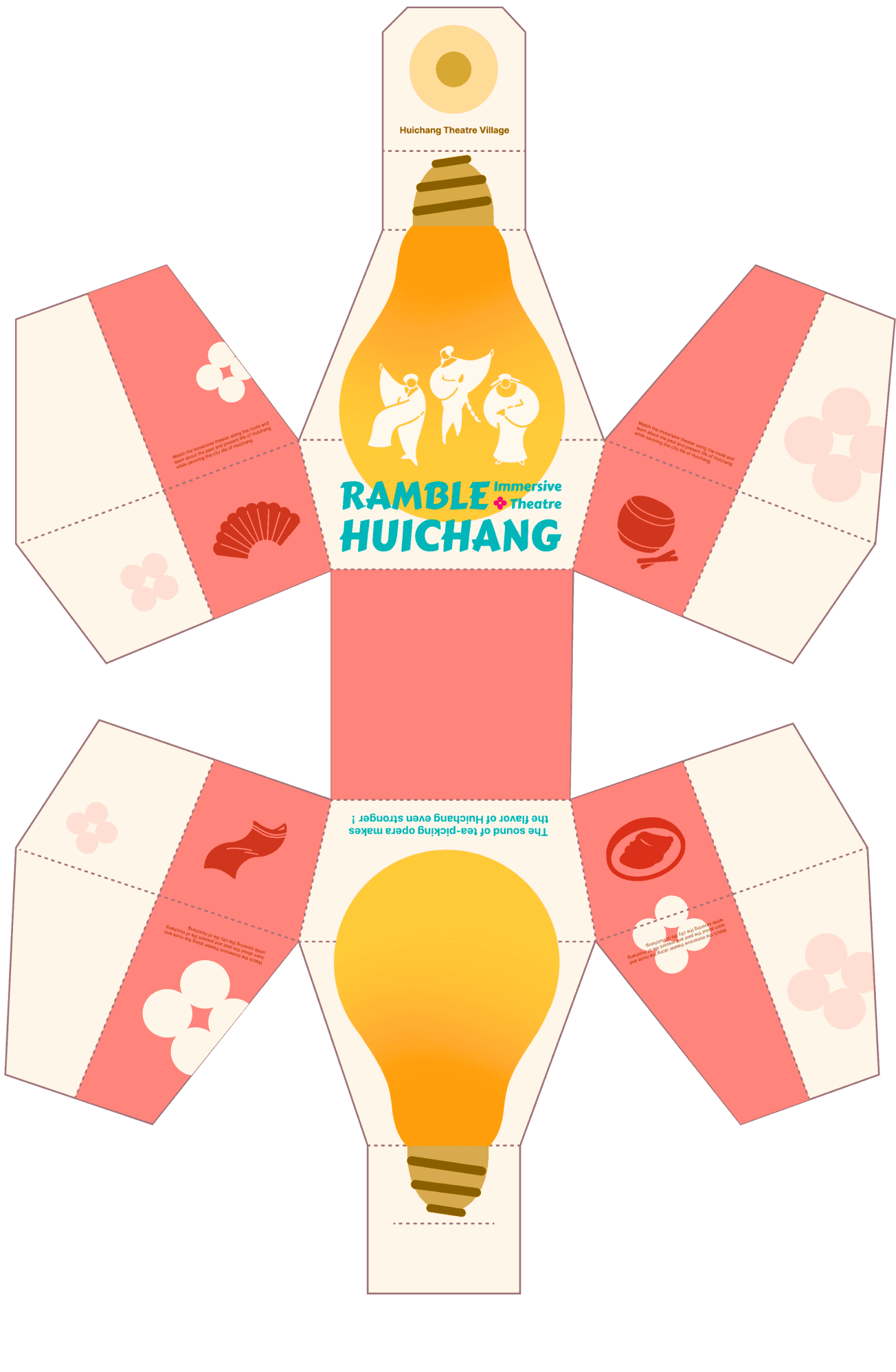
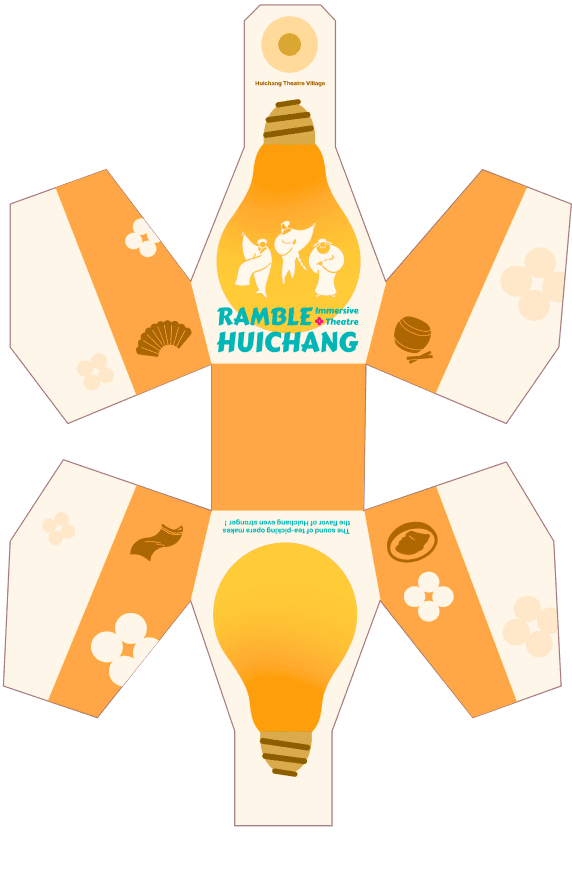
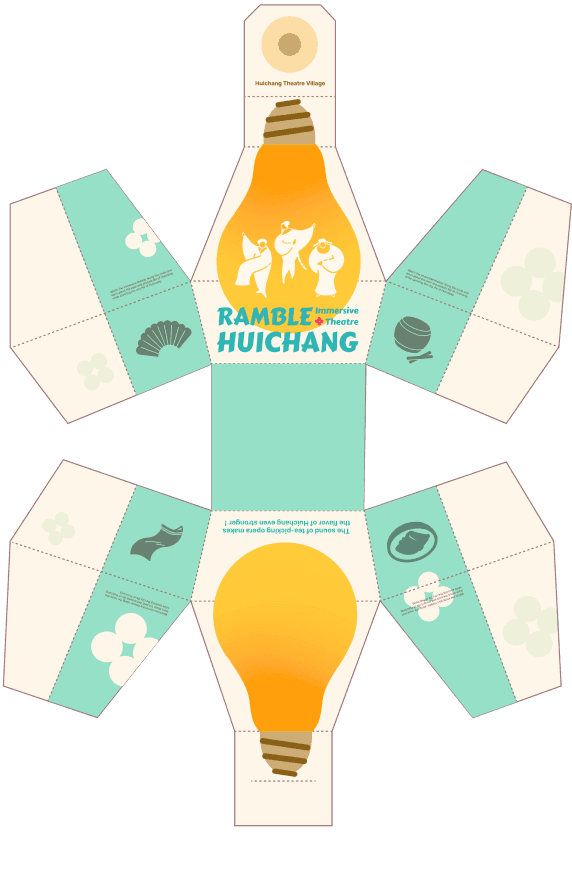
Huichang snack food characteristics and people's eating habits determine the functionality of the packaging needs, thus affecting its characteristics and structure.
Eco-material
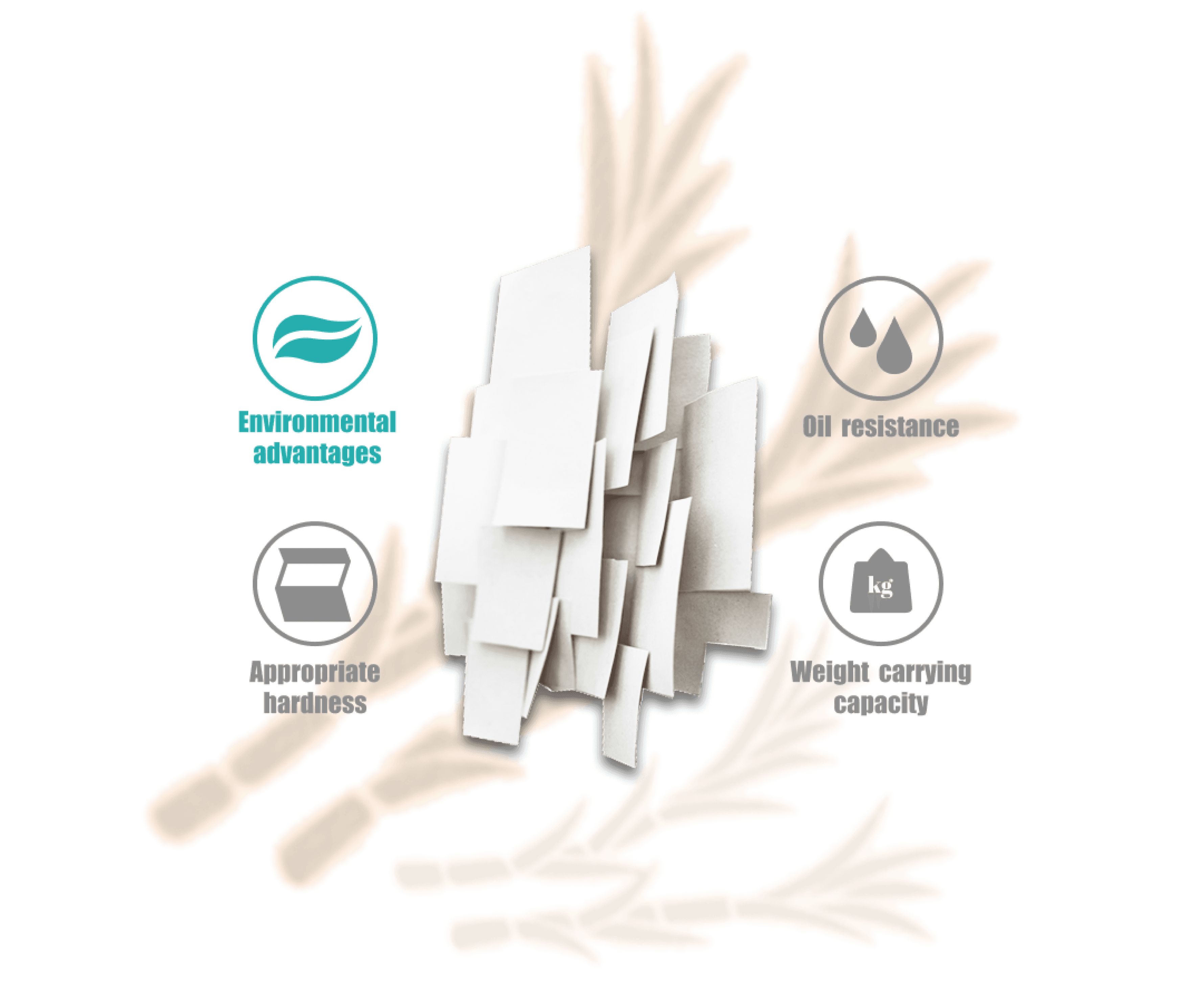
Packege Design
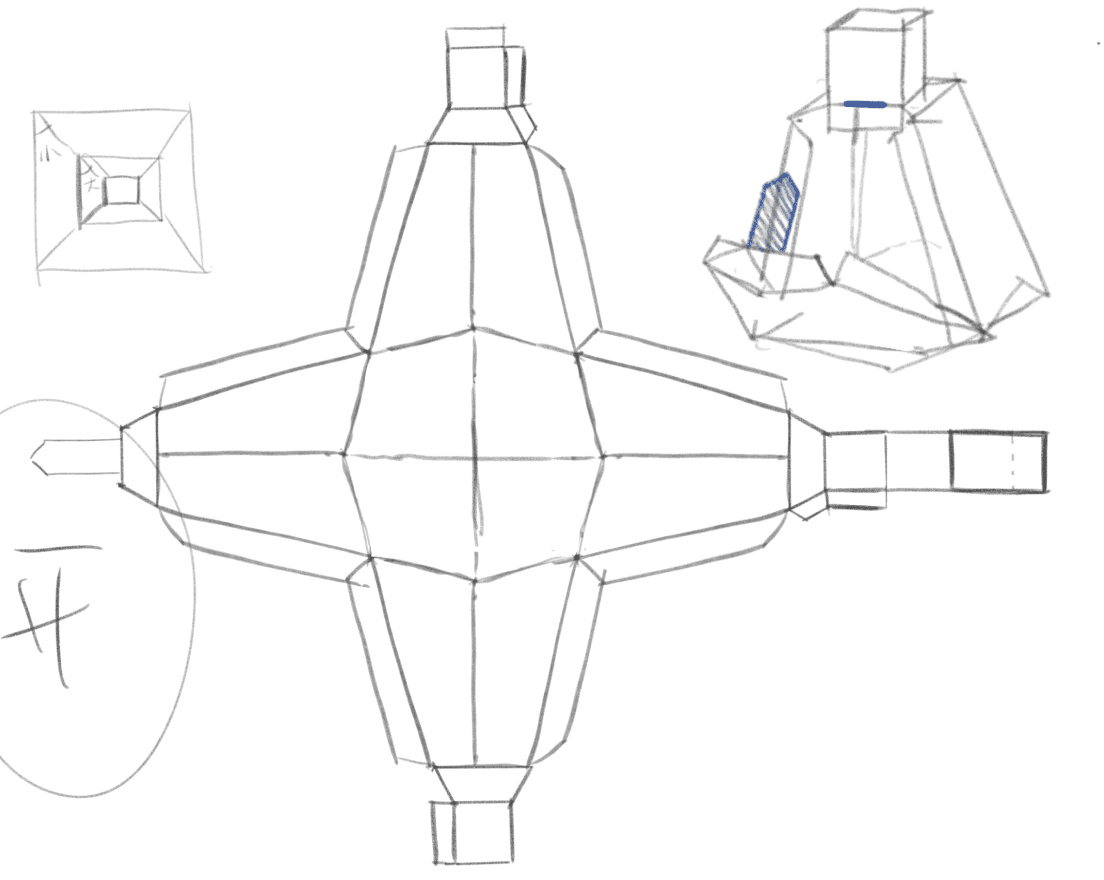
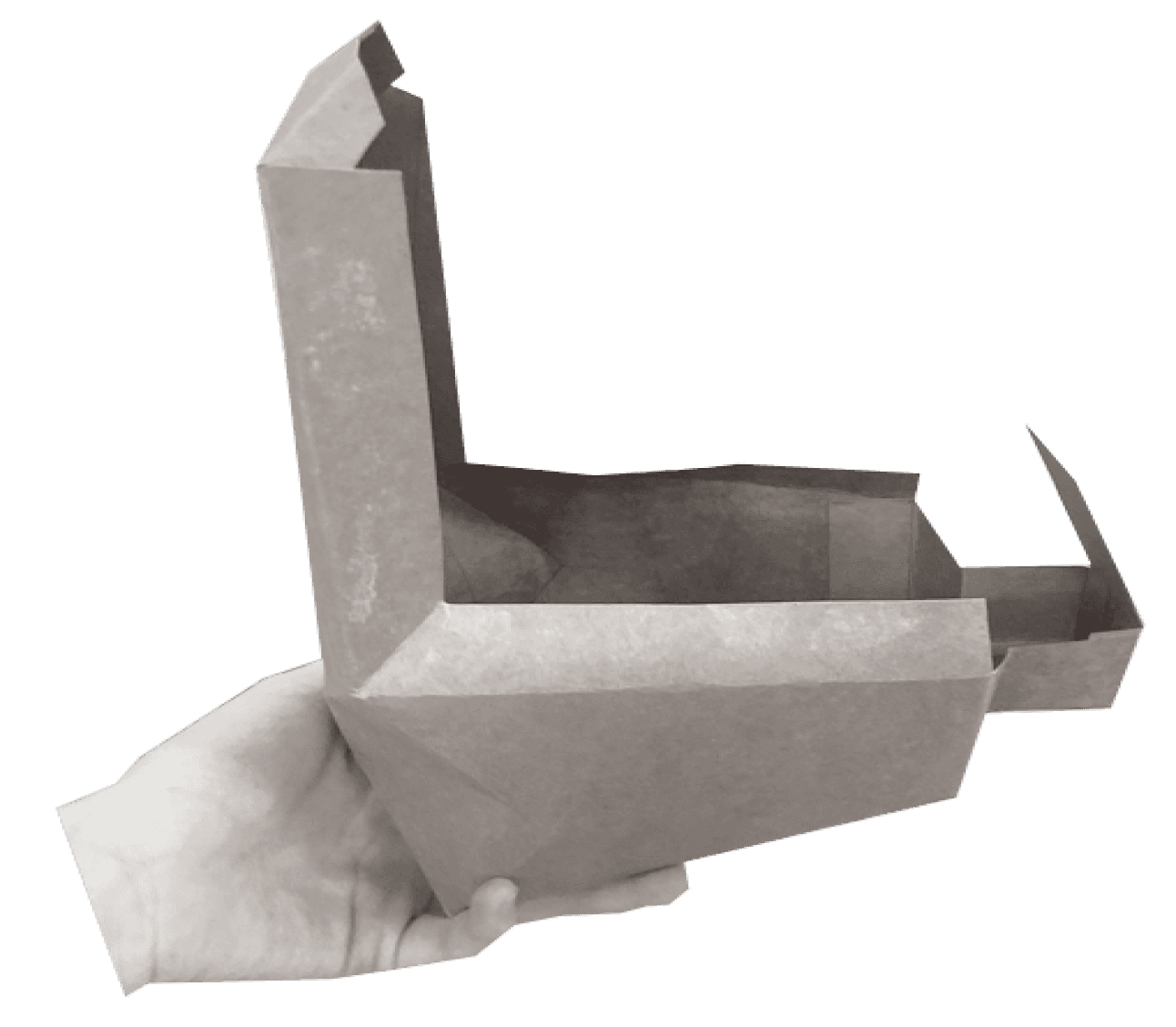
Option 1
Option 2
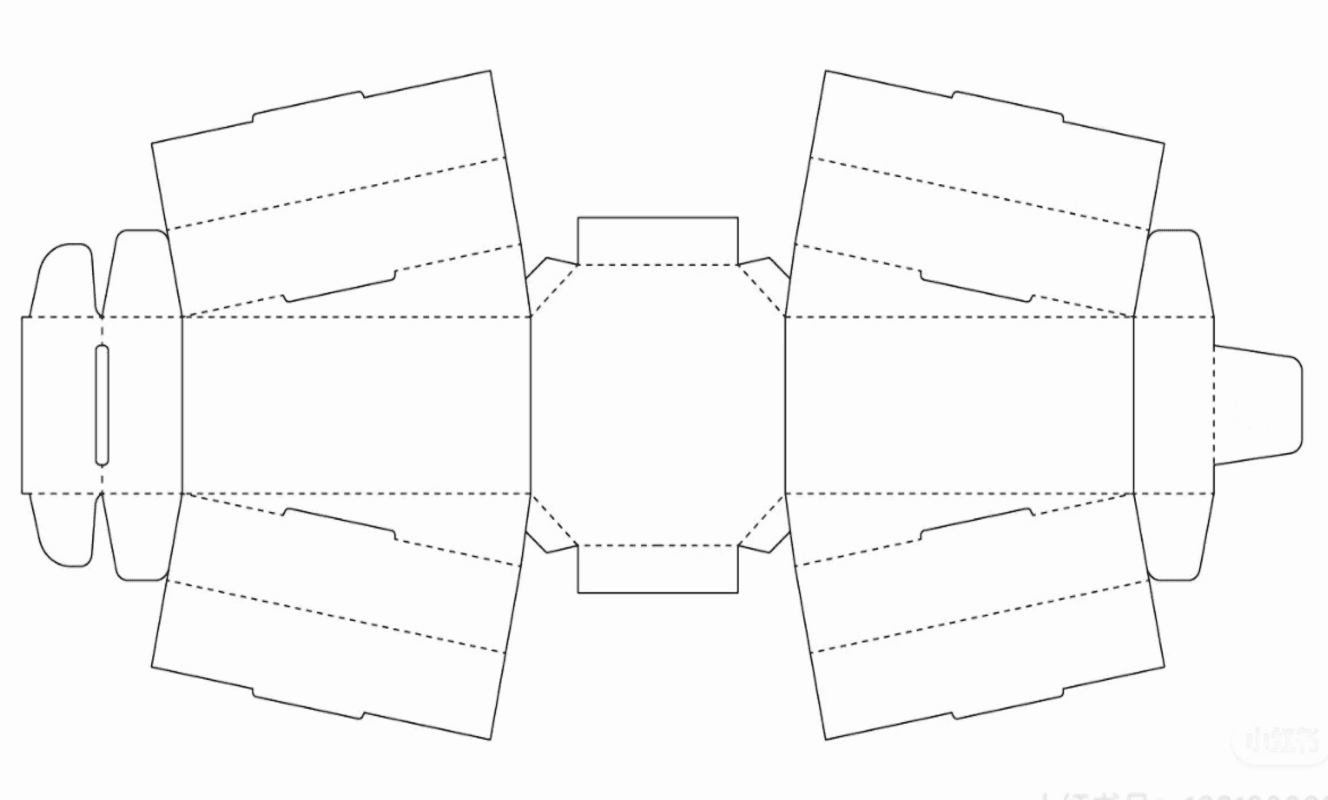
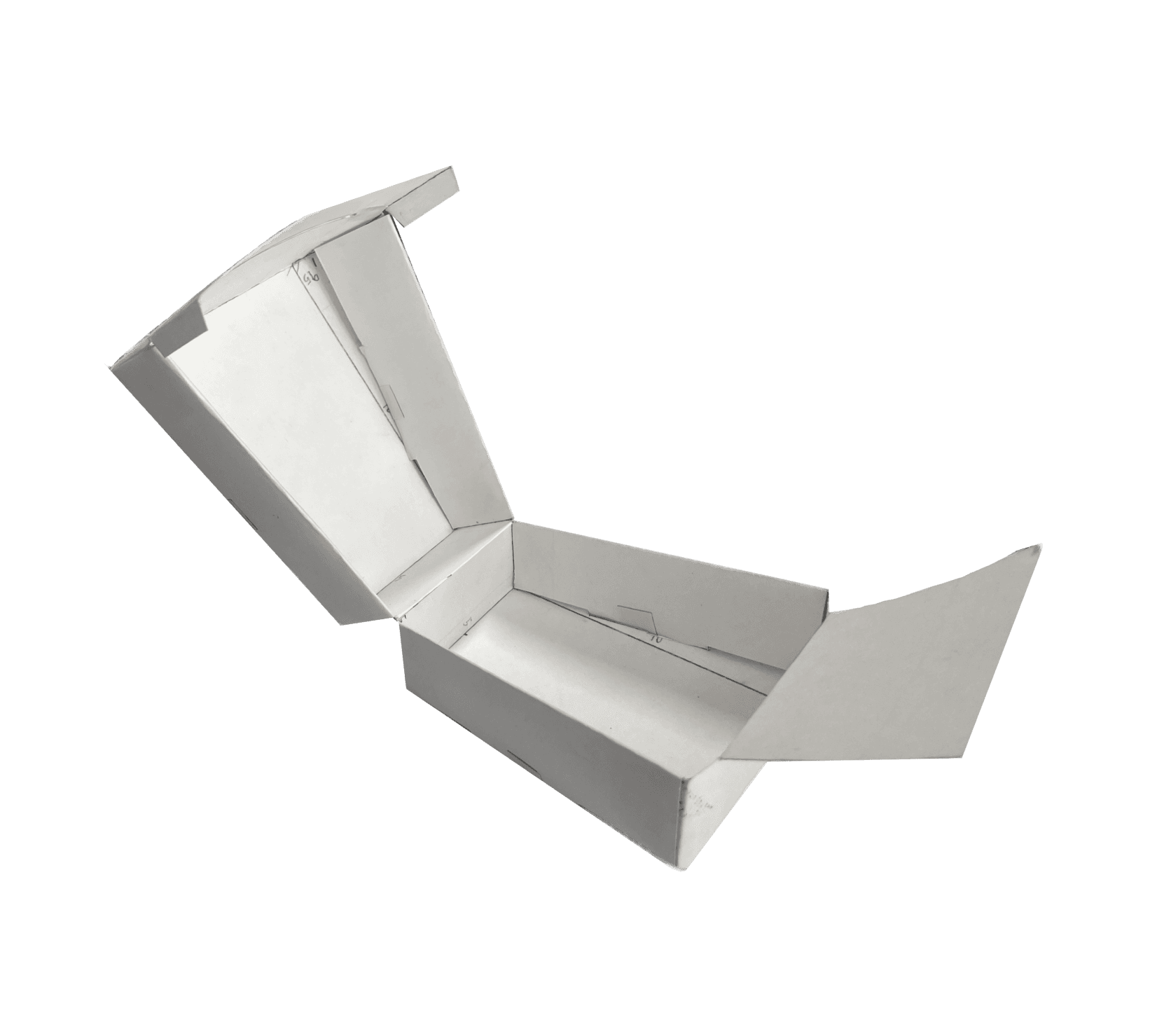
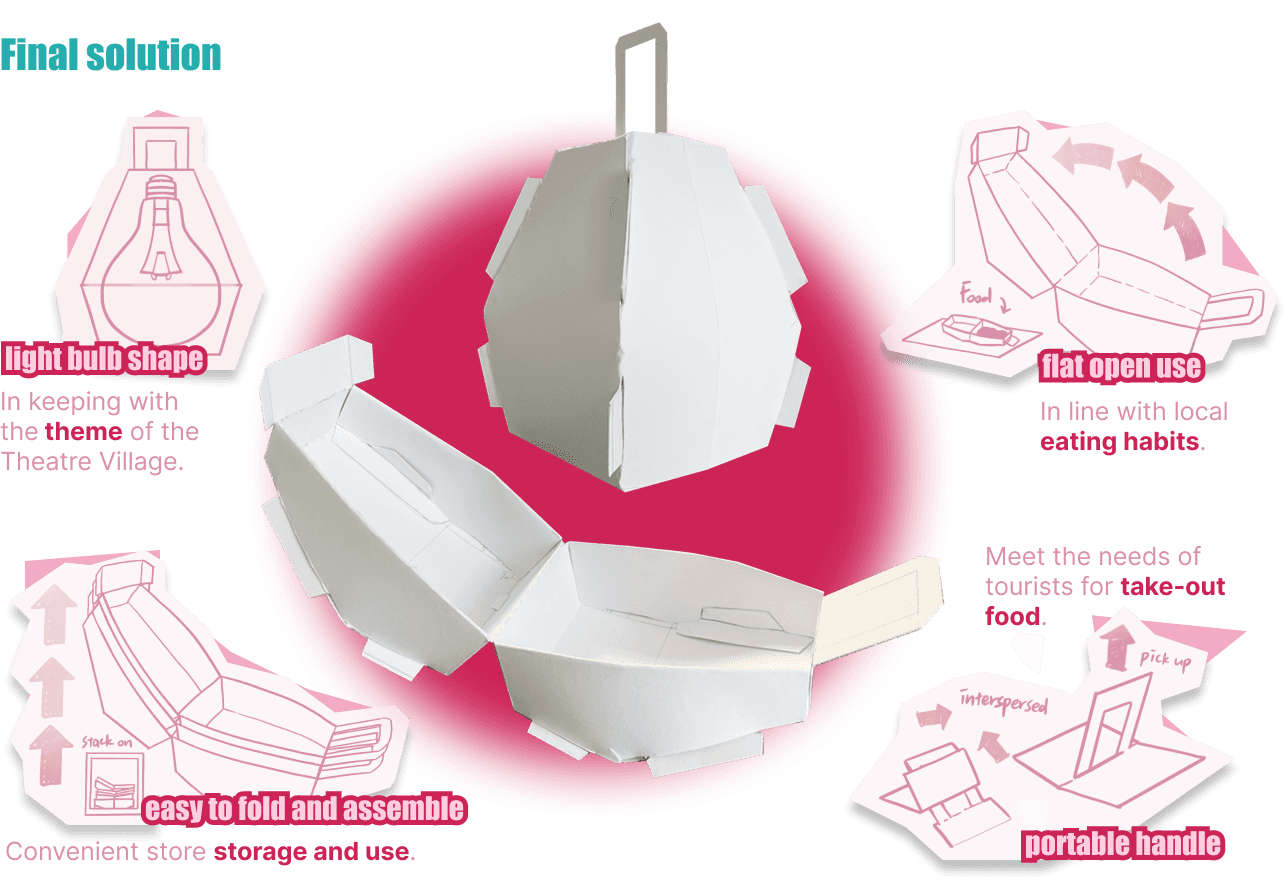
Final Design

OUTCOMES & POTENTIAL
A win-win for culture and commerce.
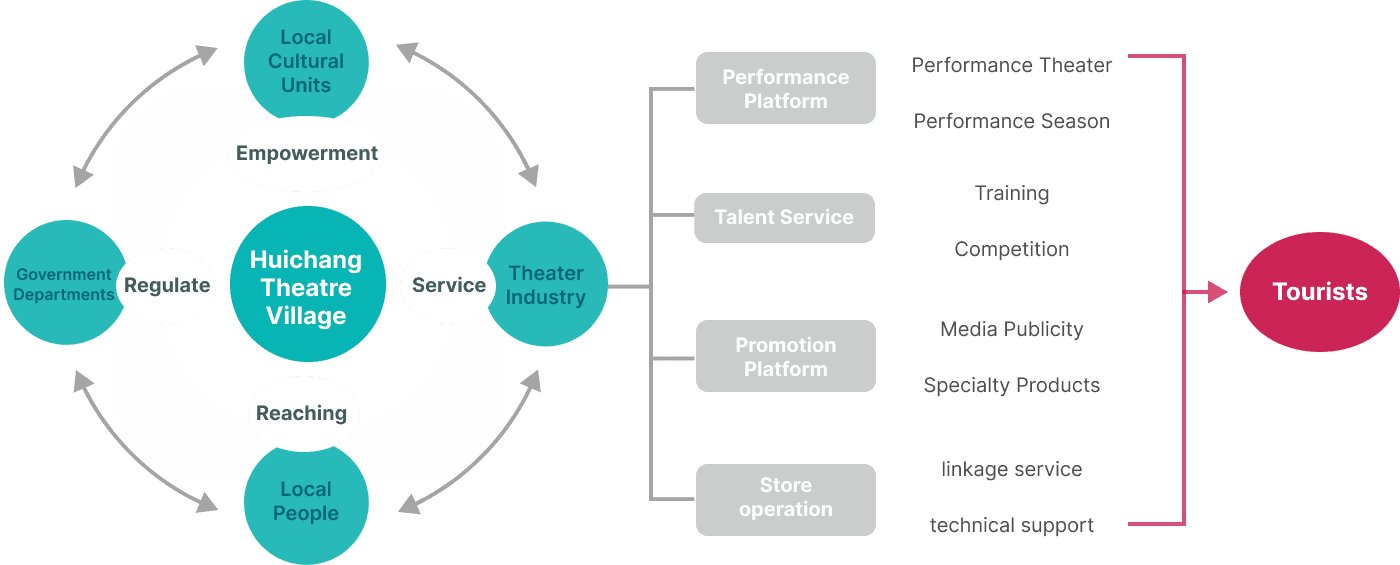
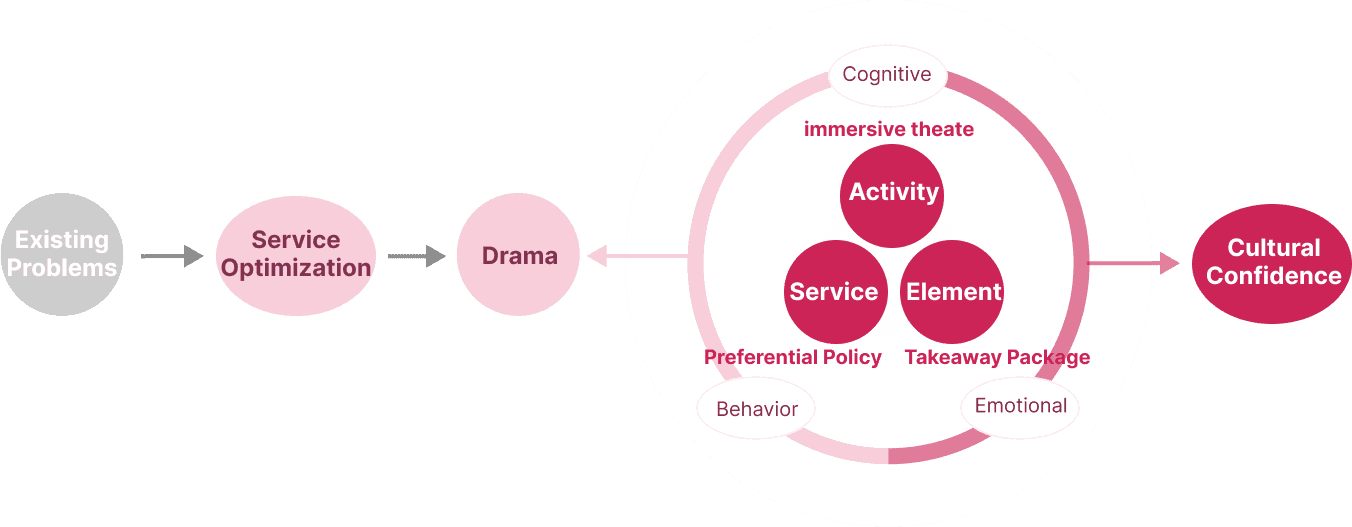
In order to show that the above strategies will contribute to the sustainable development of Huichang Theatre Village, I have reorganized my thinking and come up with a clear Feasibility logic diagram around the "Ramble Huichang" program.
Feasibility Logic Diagram.
Service Content Diagram.